In April 2025, a research team led by Miriam Diamond at the University of Toronto published a study in Environmental Science & Technology that did something the mattress industry had never done at the level of independent research: they took 16 brand-new children's mattresses available on the Canadian market, sealed them in environmental chambers, raised the temperature to mimic a sleeping child's body heat, applied weight to mimic a sleeping child's body, and measured what came out of the foam.
What came out, across the 16 mattresses, was 21 separate semi-volatile organic compounds (SVOCs), the heavier, slower-evaporating cousins of VOCs that cling to dust and surfaces rather than airing out, spanning four chemical classes: plasticizers, flame retardants, ultraviolet filters, and antimicrobial compounds. One mattress exceeded Canada's regulatory limit for di-n-butyl phthalate. Five had concentrations of regulated plasticizers above the limit set for children's toys, except mattresses aren't regulated as children's products, so the limit doesn't apply. One mattress contained TCEP, a chlorinated flame retardant whose use has been prohibited in Canadian consumer products since 2014.
It is the most important study published on children's mattress chemistry in a decade, and it finally puts data behind the questions parents were already asking. What's in there? Does it matter? What do I do about it?
Sixteen new children's mattresses tested by independent researchers at the University of Toronto, 2025.
- 21 semi-volatile organic compounds detected across all 16 mattresses combined
- Four chemical classes: phthalates (plasticizers), organophosphate esters (flame retardants), benzotriazoles (UV stabilizers), and antimicrobial biocides
- 1 mattress exceeded Canada's regulatory limit for di-n-butyl phthalate (DnBP)
- 5 mattresses had phthalate levels above the 0.1% limit that applies to children's toys (which doesn't apply to mattresses)
- 1 mattress contained TCEP, a flame retardant prohibited in Canadian products since 2014
- Emissions increased with body temperature and applied weight, suggesting real-world exposure conditions matter
Source: Vaezafshar S et al. (2025). "Are Sleeping Children Exposed to Plasticizers, Flame Retardants, and UV-Filters from Their Mattresses?" Environmental Science & Technology 59(16): 7909–7918.
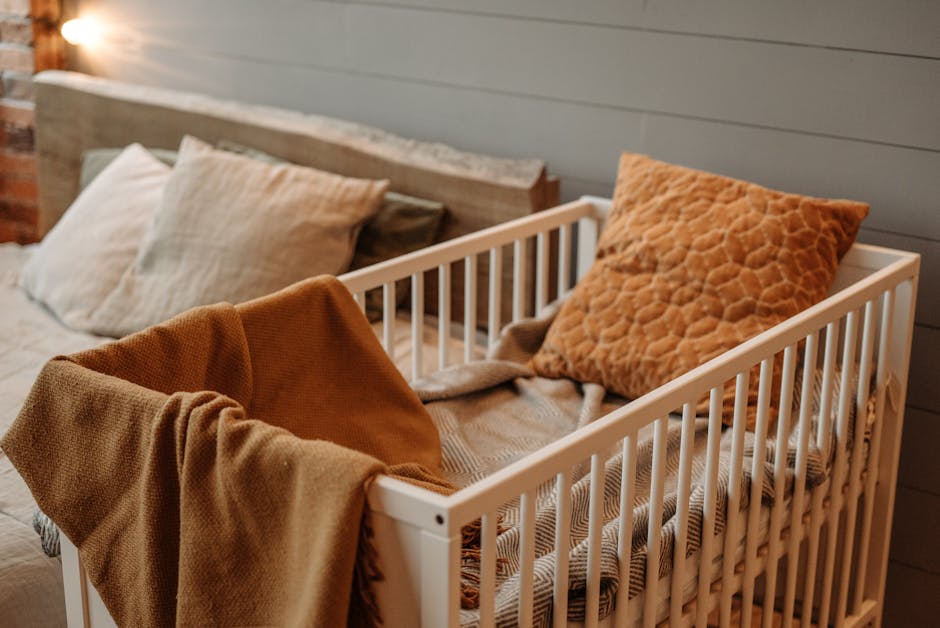
How the study was actually done
This is the part most coverage of the study skipped, and it matters because it's what makes the findings credible.
The Diamond Lab purchased 16 mattresses marketed for children — infant, toddler, and small-bed sizes — from Canadian retailers. The mattresses ranged from inexpensive foam to premium "organic" or "natural" branded products. The researchers cut samples from each mattress and placed them in sealed environmental chambers under three conditions:
- Room temperature, no weight applied — baseline emissions
- Body-temperature simulation (33°C) — to mimic the surface of a sleeping child
- Body-temperature plus mechanical loading — to mimic a child's actual weight pressing into the foam
They then analyzed the air inside each chamber using thermal desorption gas chromatography mass spectrometry — the standard analytical method for detecting volatile and semi-volatile compounds at low concentrations. The headline finding: emissions increased substantially when body temperature and mechanical loading were added. Some compounds that were near or below detection at room temperature reached measurable levels under simulated sleeping conditions. This is one of the reasons certification regimes that test new mattresses at 72 hours under static conditions miss what actually happens in a child's bed. We wrote a separate piece on what CertiPUR-US actually tests for. Peer-reviewed
A companion paper from the same lab extended the work into Canadian children's bedrooms — sampling air and dust in 25 households in Toronto and Ottawa. The bedroom findings paralleled the chamber results: the same compound classes appeared in real-world bedroom air and dust, with the highest concentrations near the bed.
What was in the mattresses
The 21 compounds spanned four classes. Here's what each class is, what it does in the human body, and why researchers are paying attention to it.
Phthalates — the plasticizers
Phthalates are chemicals added to soft plastics to make them flexible and pliable. Think of them as the ingredient that keeps plastic from cracking. In mattresses they show up in the polyvinyl chloride (PVC) backing of some waterproof covers, in printed or laminated cover materials, and sometimes in foam additives. The study detected seven distinct phthalates across the 16 mattresses.
Phthalates are endocrine disruptors — compounds that interfere with the body's hormone signaling system. The regulatory community takes these seriously enough to restrict their use in children's toys, but no equivalent mattress limit exists. The peer-reviewed literature has found associations with altered reproductive development, metabolic dysregulation, and neurodevelopmental outcomes in children exposed prenatally and during early childhood. We are not predicting outcomes for any individual child — we're documenting that the regulatory framework treats these compounds as significant enough to restrict in products children touch, while leaving the product they sleep on for 10+ hours a day largely unaddressed. Peer-reviewed
Organophosphate ester flame retardants (OPFRs)
OPFRs are the class of flame retardants that replaced the older PBDEs (polybrominated diphenyl ethers) after those were phased out in 2005. They include compounds like TCEP, TCIPP, and TDCIPP. They migrate easily out of foam because they're added to the foam as a mix-in — not chemically bonded to the polymer backbone — which means they slowly escape into the air and dust around the mattress.
The 2025 study detected eight OPFRs across the 16 mattresses. The detection of TCEP in one mattress is significant: TCEP has been prohibited in Canadian consumer products since 2014. Its presence in a new mattress sold in Canada suggests either non-compliance, residual stock predating the prohibition, or supply chain contamination from older inventory. The study authors note this finding explicitly.
A 2024 review by Shahin and colleagues in Environmental Research synthesized 48 studies on OPFR exposure and maternal-child health outcomes. The associations reported in the literature include pregnancy loss, altered gestational duration, lower birthweight, thyroid dysfunction in mothers and newborns, child metabolic dysregulation, impaired neurodevelopment, and altered immune response. Peer-reviewed
Benzotriazole UV stabilizers
UV stabilizers protect plastics and foam from degradation by ultraviolet light. They show up in mattress covers, particularly in mattresses sold with patterned or colored prints. The 2025 study detected four benzotriazole UV stabilizers in the mattresses. The compound class is less extensively researched than phthalates or flame retardants, but available data raise concerns about endocrine disruption potential. Inferred
Antimicrobial biocides
Some mattresses are advertised as "antimicrobial," meaning the cover or foam has been treated with a chemical compound to suppress bacterial or fungal growth. The 2025 study detected two antimicrobial compounds across the mattresses. These chemicals are added to give the mattress a marketing claim about hygiene, but their actual utility (given that mattresses are not in direct skin contact through bedding and the bedroom microbiome is dominated by occupant-shed organisms) is genuinely unclear. The chemistry adds a compound your child is in nightly contact with for a marketing claim that may not meaningfully reduce any real-world bacterial exposure.
Our position: "no antimicrobial treatment" on a mattress label is a better signal than any of the compounds typically used.
What the study did not establish
Here is what the Vaezafshar 2025 study did not show:
- It did not measure outcomes in any specific child. It measured what came out of the mattresses, not what went into the children sleeping on them.
- It did not test every mattress on the market — only 16. The findings can't be extrapolated to specific brands not tested in the study.
- It did not establish a causal relationship between any compound detected and any health outcome. It documented exposure potential.
- It did not study long-term effects of the levels of exposure typically experienced from a mattress over years of use.
What the study did establish — and what is now in the peer-reviewed literature — is that new children's mattresses available on the Canadian market in 2025, including some marketed as "natural," contained chemistry that increases child exposure to compound classes regulated in other consumer product categories.
How to find a non-toxic crib mattress: what to look for
The most useful question a parent can ask is: what is this mattress made of? Brands that publish complete material disclosure make this easy. Brands that won't have already answered you.
The certifications that actually exclude problematic chemistry
These certifications, applied to a children's mattress, prohibit the compound classes that the Vaezafshar 2025 study detected:
- GOTS (Global Organic Textile Standard) — prohibits phthalates, formaldehyde, and chlorinated flame retardants in certified textiles. Applies to wool and cotton components.
- GOLS (Global Organic Latex Standard) — prohibits synthetic plasticizers and synthetic flame retardants in certified latex.
- MADE SAFE — broader hazard-screening certification covering the full mattress. Excludes phthalates, OPFRs, antimicrobial biocides, and benzotriazole UV stabilizers.
- GreenGuard Gold — emissions-based certification. Tests VOC and SVOC emissions over a 14-day window against pediatric exposure thresholds. Higher-quality children's mattresses typically carry it.
A mattress with GOLS + GOTS + MADE SAFE certification, by construction, doesn't contain the four compound classes detected in the 2025 study. That's the most reliable signal a parent can use.
The certifications that don't tell you what you need to know
- CertiPUR-US is foam-only and tests the foam at 72 hours after manufacture under static conditions. It doesn't address the cover, the fire barrier, or what the foam emits at year five. A CertiPUR-US-certified children's mattress can still contain plasticizers in the cover and flame retardant chemistry not excluded by the foam test.
- OEKO-TEX Standard 100 is a textile certification with criteria that vary by product class. It's better than nothing but less stringent than GOTS for children's products.
Best baby crib mattress: brands with documented disclosure
These brands publish complete material disclosure and carry the certifications that exclude the problematic compound classes. None of these brands pays us.
- Naturepedic Organic Cotton Classic — Wool fire barrier, GOTS-certified organic cotton cover, no foam in the basic Classic model. GOTS, GreenGuard Gold, MADE SAFE certified. Approx. $260+.
- Avocado Organic Crib Mattress — GOLS-certified organic latex core, GOTS-certified wool fire barrier, organic cotton cover. Dual-firmness design for infant/toddler. MADE SAFE certified. Approx. $350+.
- My Green Mattress Emily Crib Mattress — Innerspring core with wool fire barrier and GOTS-certified organic cotton cover. MADE SAFE, GreenGuard Gold, GOTS, GOLS certified. Family-owned, Illinois-made. Approx. $400+.
- Obasan (Canadian, made in Ottawa) — GOLS-certified organic latex, GOTS-certified wool and cotton. Made-to-order. Strong choice for Canadian families.
- Naturepedic Lightweight — Maintains GOTS organic cotton cover and wool fire barrier. Lower entry point than the Classic. Around $200.
- Newton Baby Original Crib Mattress — Carries GreenGuard Gold. Food-grade polymer core; different trade-off than certified-organic options. Some families prefer the washability.
If you're considering a brand not on the list above, the question to ask in writing is: "What is the fire barrier material in your crib mattress? Does it contain fiberglass, OPFRs, or any chemical flame retardant? Does the cover contain any phthalate plasticizers? Is your product certified by GOTS, GOLS, MADE SAFE, or GreenGuard Gold?" Save the response.
What is the safest crib mattress for an infant?
"Safest" depends on what you're optimizing against, so here is the answer in both directions.
Against chemistry exposure, the safest crib mattresses available in 2026 are GOTS + GOLS + MADE SAFE certified products with documented full-material disclosure. The Naturepedic Organic Cotton Classic, My Green Mattress Emily, and Avocado Organic Crib are the most accessible options meeting this criterion.
Against SIDS (sudden infant death syndrome) — which is a much more serious and well-established risk than the chemistry findings — the relevant criteria are firmness, proper fit in the crib, no soft bedding or stuffed toys, and back-sleeping. The American Academy of Pediatrics maintains current guidance on safe sleep that should be the primary reference for SIDS risk reduction. All of the certified-organic crib mattresses listed above meet AAP firmness recommendations.
The two safety considerations are not in conflict. A firm, well-fitting, certified-organic crib mattress addresses both.
What about toddler and kid mattresses?
The chemistry concerns documented in the Vaezafshar 2025 study apply to children's mattresses generally, not just cribs. The best toddler mattresses for chemistry exposure follow the same logic: GOTS + GOLS + MADE SAFE certifications, wool fire barriers, organic cotton covers, no antimicrobial treatments, no PVC-backed waterproof covers.
- Naturepedic Verse Organic (twin)
- Avocado Eco Organic Kids (twin)
- My Green Mattress Kiwi (twin)
- Obasan Twin Organic
- Brentwood Home Cedar Natural Luxe (twin — more affordable)
See also our CertiPUR-US guide and our fiberglass guide for cross-linked buying decisions.
What we will and will not say
We are not going to tell you that your child's existing mattress is harming them. The Vaezafshar 2025 study documented exposure potential, not health outcomes in specific children. We don't have that data, and we won't manufacture certainty we don't have.
What we will say: the chemistry detected in some children's mattresses tested in 2025 includes compound classes that the regulatory community treats seriously enough to restrict in adjacent product categories. Children sleep on these surfaces for ten-plus hours a day during the developmental periods when their nervous, endocrine, and immune systems are most sensitive to chemical exposures.
If you have an existing crib mattress and you're now worried: ventilate the bedroom well, wash the bedding in hot water weekly, vacuum the bedroom regularly with HEPA filtration, replace older mattresses when you can. Don't panic-replace; the chemistry exposure from a year-old mattress that's already mostly off-gassed is lower than from a new one that hasn't. (This is also why, on chemistry alone, a secondhand crib mattress can be the lower-exposure choice — though firmness, fit, and condition are the questions that matter more.)
If you're about to buy a crib mattress: the certified-organic options are not much more expensive than the cheaper foam options once you factor in five to ten years of use. The Naturepedic Classic at $260 or the My Green Mattress Emily at $400 cost roughly the same per night of use as the foam options once you account for typical replacement cycles.
Frequently asked questions
What is the safest crib mattress?
The most chemistry-safe crib mattresses carry GOTS, GOLS, and MADE SAFE certifications, with wool fire barriers, organic cotton covers, no antimicrobial treatments, and no PVC-backed waterproof covers. Top options in 2026: Naturepedic Organic Cotton Classic, Avocado Organic Crib Mattress, My Green Mattress Emily, and Obasan (Canadian). All four meet AAP firmness recommendations for SIDS-safe sleep.
What is the best organic crib mattress?
For most families, the Naturepedic Organic Cotton Classic at $260 is the most accessible certified-organic option (GOTS, GreenGuard Gold, MADE SAFE). For families wanting natural latex and willing to spend more, the Avocado Organic Crib Mattress and My Green Mattress Emily are stronger picks. All publish complete material disclosure.
Is a breathable crib mattress safer for SIDS?
The American Academy of Pediatrics recommends a firm, well-fitting crib mattress with no soft bedding for SIDS risk reduction. A firm certified-organic mattress meets this recommendation. Brands marketing specifically on breathability typically use synthetic polymer cores rather than certified-organic materials — a different trade-off. For most families, AAP-compliant firm sleep on any well-made crib mattress with back-sleeping addresses the rebreathing concern.
What did the 2025 Toronto crib mattress study find?
The Vaezafshar et al. (2025) study tested 16 new children's mattresses sold in Canada and detected 21 semi-volatile organic compounds across four chemical classes. One mattress exceeded Canada's regulatory limit for di-n-butyl phthalate. Five exceeded the 0.1% phthalate limit applied to children's toys. One contained TCEP, a flame retardant prohibited in Canadian consumer products since 2014. Emissions increased substantially with body temperature and applied weight.
Is fiberglass in baby mattresses?
Fiberglass is sometimes used as a flame barrier in inexpensive children's mattresses. None of the certified-organic options listed above use fiberglass. For mattresses outside the certified-organic options, check the law tag. A separate guide on fiberglass in mattresses walks through how to check and what to do.
Is organic crib mattress worth it?
For chemistry exposure specifically, yes — certified-organic crib mattresses remove the compound classes detected in the Vaezafshar 2025 study. The price difference is meaningful but not extreme: $260 (Naturepedic Classic) versus $80-150 for inexpensive foam options. Across a typical crib mattress lifespan, that works out to a few cents per night for the chemistry difference.
Should I be worried about my child's current mattress?
Don't panic. The Vaezafshar 2025 study documented exposure potential, not health outcomes in specific children. If your child's mattress is more than a year old, most of the chemistry has already off-gassed and ongoing exposure is much lower than from a new mattress. Practical actions: ventilate the bedroom well, wash bedding in hot water weekly, vacuum with HEPA filtration, and when replacement time comes, choose a certified-organic option.
Citations
- Vaezafshar S et al. (2025). "Are Sleeping Children Exposed to Plasticizers, Flame Retardants, and UV-Filters from Their Mattresses?" Environmental Science & Technology 59(16): 7909–7918. DOI 10.1021/acs.est.5c03560 Peer-reviewed
- Vaezafshar S et al. (2025). "Young Children’s Exposure to Chemicals of Concern in Their Sleeping Environment: An In-Home Study." Environmental Science & Technology Letters 12(5): 468–475. DOI 10.1021/acs.estlett.5c00051 Peer-reviewed
- Shahin S et al. (2024). "Exposure to organophosphate esters and maternal-child health." Environmental Research. DOI 10.1016/j.envres.2024.118955 Peer-reviewed
- Stapleton HM et al. (2011). "Identification of flame retardants in polyurethane foam collected from baby products." Environmental Science & Technology. DOI 10.1021/es2007462 Peer-reviewed
- Health Canada (2014). Consumer Products Containing TCEP Regulations (SOR/2014-79). canada.ca Regulatory
- Government of Canada. Phthalates Regulations under the Canada Consumer Product Safety Act. Regulatory
- Global Organic Textile Standard (GOTS) — current criteria for textile certification. Regulatory
- Global Organic Latex Standard (GOLS) — current criteria for latex certification. Regulatory
- MADE SAFE — Hazard List, current screened-out ingredients including phthalates, OPFRs, antimicrobial biocides. Regulatory
- GreenGuard Gold — current emissions criteria, including pediatric exposure thresholds. Regulatory
- American Academy of Pediatrics. "A Parent's Guide to Safe Sleep." healthychildren.org Regulatory
- California AB 2998 (2018) — Toxic Free Furniture Act. Regulatory
- Maine LD 1537 (2021) — PFAS in Products Law, effective January 1, 2026. Regulatory
- Cooper EM et al. (2016). "Results from Screening Polyurethane Foam Based Consumer Products for Flame Retardant Chemicals: Assessing Impacts on the Change in the Furniture Flammability Standards." Environmental Science & Technology. DOI 10.1021/acs.est.6b01602 Peer-reviewed
- Attfield KR et al. (2026). "Flame retardant biomarker changes with furniture replacement after flammability standard update." Environmental Pollution. DOI 10.1016/j.envpol.2025.127326 Peer-reviewed
- Rodgers KM et al. (2021). "Do flame retardant concentrations change in dust after older upholstered furniture is replaced?" Environment International. DOI 10.1016/j.envint.2021.106513 Peer-reviewed
- Gill B et al. (2024). "Trends in flame retardant levels in upholstered furniture and children's consumer products after regulatory change." Chemosphere. DOI 10.1016/j.chemosphere.2024.141152 Peer-reviewed
- International Programme on Chemical Safety. "Endocrine Disruptors: An Updated Review." Regulatory