Three different things get treated as one. The smell going away is real. The emission rate falling is real. Emissions stopping altogether, inside the working life of a foam mattress, is not something the evidence supports. Most consumer guidance runs the three together, which is why "how long does it off-gas" gets such confident and such varied answers.
Unboxed it tonight and need to know what to do before bed? Start with the four-step plan for a new mattress and come back here for the evidence behind it.
Worried the smell is affecting how you feel? See brain fog and your bedroom — the honest read on whether bedroom VOCs affect cognition.
What off-gassing actually is
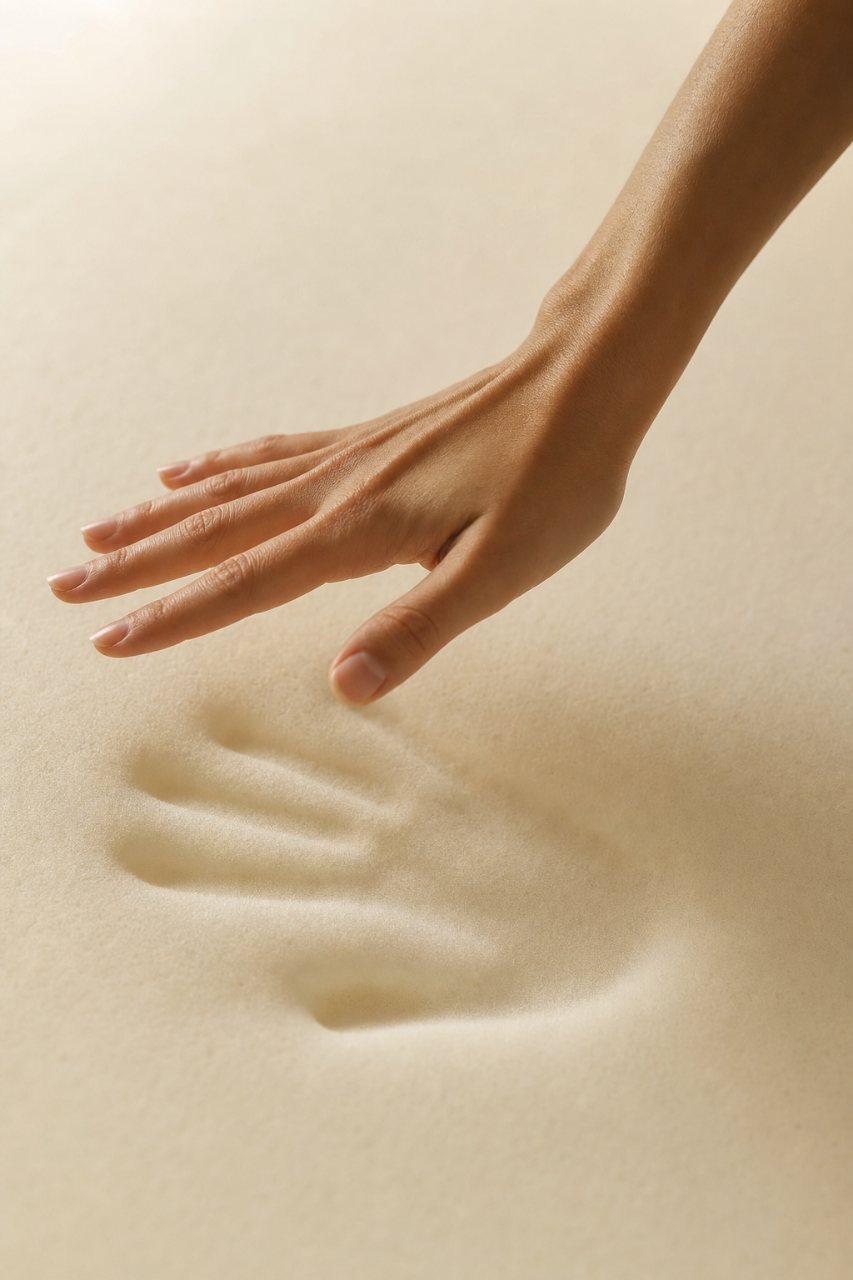
Volatile organic compounds — VOCs — are chemicals that evaporate readily at room temperature and enter the air as gases. The word "volatile" describes their physical behavior, not their toxicity; some are benign, some are not, and the question of harm depends on what specific compounds are present and at what concentrations.
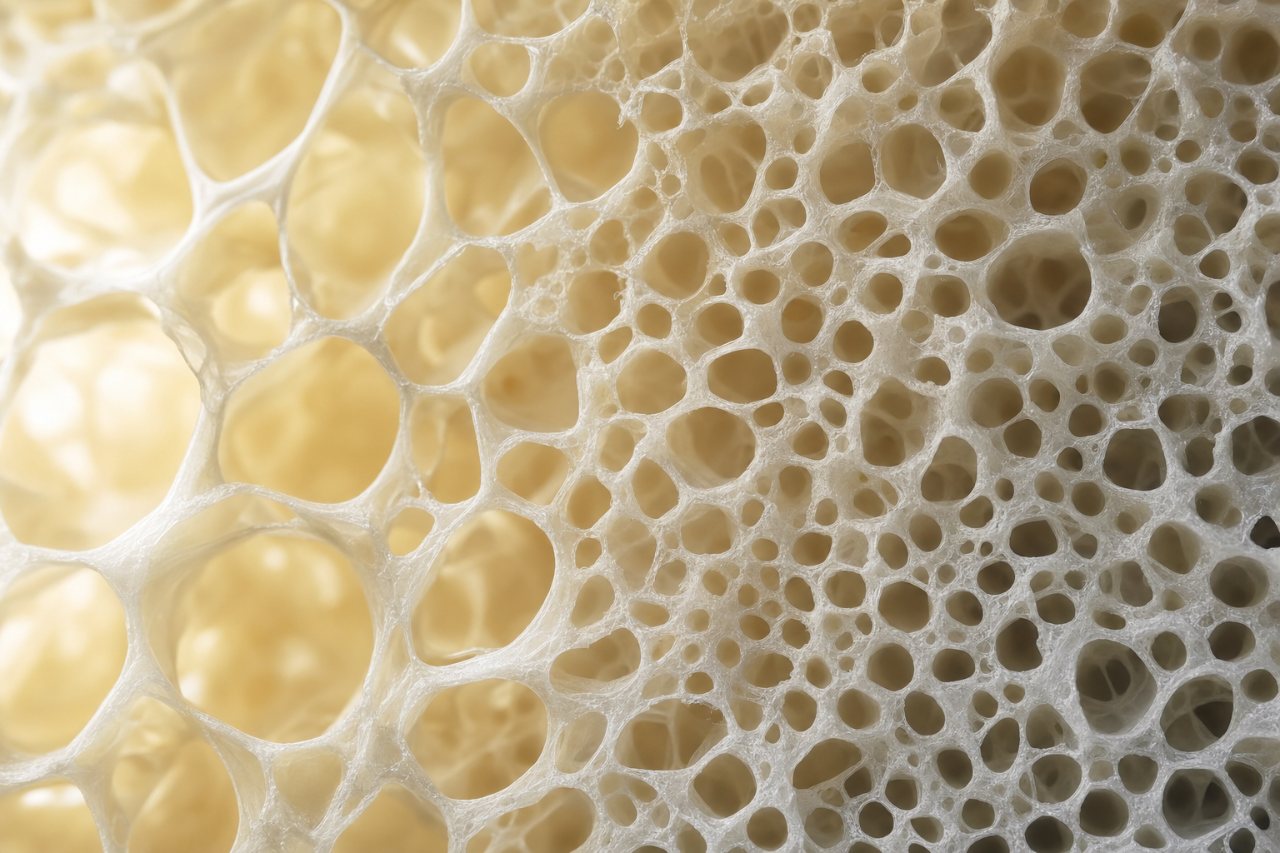
Most mattress foam is polyurethane — a petroleum-derived polymer manufactured through a chemical reaction between polyols and isocyanates. The reaction produces a foam matrix with a particular cell structure, but the manufacturing process is never perfectly clean. Some precursor chemicals, residual solvents, catalysts, and reaction byproducts remain trapped in the foam's structure after production. As the foam ages and its polymer matrix slowly degrades, those compounds release into the surrounding air. That process is off-gassing.
This is not a defect. It is normal polymer chemistry. Every petroleum-derived foam product does this to some degree. The questions worth asking are: which compounds, at what concentrations, over what timeframe — and what environment are those compounds accumulating in.
The timeline — what the research shows
The most useful study in the public literature for answering the timeline question is a 2022 paper published in Chemosphere (indexed on PubMed) by Beckett et al. Researchers placed two commercially available memory foam mattresses in a controlled chamber and measured VOC emissions continuously over 32 days. Peer-reviewed
The primary compounds identified — about 81% of the first-year ΣVOC concentration in one mattress and 95% in the other — were 2-propanol (isopropanol), acetone, chloromethane, and toluene. The emission curve showed a consistent pattern across both mattresses:
- Day 1: Emissions peak. CertiPUR-US measures across the first 72 hours — and it confirms those emissions fall below the certification threshold. But it is the moment of highest concentration, not a steady state.
- Days 3–7: The steepest part of the decay. The most volatile compounds leave first, so the emission rate drops fastest here.
- Weeks 2–4: Continued decline toward background levels in a ventilated space. The smell, for most people, is gone or nearly gone by this point.
- Long-term: Measurable low-level emissions continue as the polymer matrix slowly degrades. The study modeled one-year average ΣVOC concentrations of 2.7 and 4.2 μg/m³ for the two mattresses. Not zero.
Timeline synthesized from the Beckett et al. 2022 32-day chamber study (Chemosphere); "smell" columns reflect typical olfactory thresholds, which vary by person and ventilation. Peer-reviewed
The study also quantified emission half-lives: short-term half-lives on the order of hours, about 4 or 12 depending on the chemical (the burst of the most volatile compounds in the first days) and a long-term half-life of approximately 24 days (the slower, ongoing release from polymer degradation). Both numbers are from the same mattresses, describing two different phases of the same process. Peer-reviewed
A separate NIST study on the flame retardant TCPP, a compound used in some polyurethane foams as an alternative to fiberglass fire barriers, found measurable TCPP emissions still present at 1.5 years of monitoring. That is a specific compound with a specific chemistry, not a universal finding, but it illustrates that "new mattress smell gone" is not the end of the emission story for all compounds. Peer-reviewed
The key structural point: CertiPUR-US tests at 72 hours. That test was designed to confirm that peak new-foam emissions fall below a threshold. It does exactly that. What it was not designed to do — and what it doesn't tell you — is anything about the emission curve over months or years. That's not a criticism of the standard. It's a description of what it was built to measure. Peer-reviewed for emission curve; Inferred for implication about certification scope
Why body heat changes the picture
Certification chamber tests run at controlled room temperature — typically around 23°C. A human body is approximately 37°C. The surface of a mattress in contact with a sleeping person reaches temperatures closer to 36–37°C. That difference is not minor.
Oz et al. (2019) tested eight polyurethane mattresses in parallel flow chambers, comparing emissions across temperature, relative humidity and CO₂. Under sleeping conditions emissions rose significantly, and elevated heat was the major contributor, ahead of the other two. PubMed Peer-reviewed
What this means in practice: the mattress you sleep on for 8 hours at body temperature is off-gassing at a meaningfully higher rate than the same mattress sitting unoccupied in a temperature-controlled chamber. The certification test captures one condition. Sleep is another condition. Inferred — the studies measure temperature effects on foam but not specifically body-heat-on-mattress-in-use
European indoor air quality guidance for polyurethane foam VOCs, developed through the EUROPUR/UBA framework, derives health-protective values for specific VOCs from foam products — acknowledging the gap between controlled chamber conditions and real occupant exposure. The guidance exists precisely because the research community recognized that test conditions and use conditions are different. Peer-reviewed
This is not an alarm; it is a gap with a name. Nothing in the 32-day compound list supports catastrophizing for healthy adults. But every certification number you will ever read was measured on cold foam, and you sleep on warm foam. Read the numbers with that correction in your head.
Symptoms people report from mattress off-gassing
Sensitivity to mattress off-gassing varies a lot between individuals. The reports that show up most consistently in consumer-complaint data, indoor-air-quality surveys, and the small clinical literature on VOC sensitivity are:
- Chemical or "new-product" odor — strongest in the first 24–72 hours, fading over days to weeks. Often described as plastic, glue, or solvent-like.
- Headaches — typically morning headaches or headaches that build over the first few nights of use, then resolve as emissions decay.
- Eye, nose, or throat irritation — burning, dryness, or mild congestion, similar to what people experience around fresh paint or new carpet. The general indoor-air-quality literature documents this pattern for VOC mixtures.
- Respiratory complaints — coughing, mild wheezing, or aggravation of pre-existing asthma. More common in people with reactive airways or documented chemical sensitivity.
- Nausea, dizziness, or "brain fog" — reported less often, generally in people with multiple chemical sensitivity or in scenarios with poor ventilation.
- Disturbed or non-restorative sleep on the new mattress — see our piece on non-restorative sleep for the bedroom-air-quality literature on this.
These symptoms are usually transient. They are strongest in the first days, decline with ventilation, and resolve for most people within a few weeks. People who report persistent symptoms — beyond a few weeks, or severe enough to disrupt sleep — should speak with a clinician about underlying respiratory or sensitivity issues; persistent symptoms are not a diagnosis you can make from a website.
The symptom pattern is also a useful exposure check: if symptoms appear with a new mattress and resolve when you stop sleeping on it, the mattress is contributing. If symptoms persist after the mattress has aired out and remain after weeks of normal use, the cause is likely elsewhere.
Is memory foam off-gassing harmful?
Short version here, because we keep a full piece on exactly this question: memory foam is not acutely toxic. Nobody's first night on a new mattress ends in an emergency room, and the symptoms people do report — headaches, irritated eyes and throat, nausea — fade as the foam airs out.
The compounds are a different matter from the mattress. Formaldehyde is an IARC Group 1 carcinogen; typical bedroom concentrations from a mattress sit far below occupational limits. Organophosphate flame retardants are possibly associated with impaired neurodevelopment and child metabolic dysregulation across the 48 studies reviewed by Shahin et al. (2024) — at exposures an order of magnitude above what a mattress delivers. Hazard is not dose. Peer-reviewed
Against the alternatives, memory foam sits in the middle: less concerning than a fiberglass-barrier mattress with a damaged cover, more chemistry than certified-organic latex (GOLS + GOTS + MADE SAFE), which skips the synthetic additives entirely. What remains — and what deserves to be taken seriously rather than rounded to zero — is the cumulative question: years of low-level mixtures, met nightly, through pregnancy or childhood. No study has separated the mattress's contribution from the rest of the room's. Inferred
For the deeper chemistry of how foam ages over years of use — including autoxidation and polymer breakdown products — see our synthesis on mattress aging chemistry.
The term "sleep micro environment" — or SME — is not a consumer-facing invention. Oz et al. (2019), in ACS Environmental Science & Technology, explicitly used the term in a peer-reviewed context, with the authors stating: "This study concentrates on the influence of SME conditions on VOC emissions from polyurethane mattresses." What Embr is doing is translating that scientific framing into language accessible to people making decisions about what they sleep on. Peer-reviewed
The bedroom at night is not simply "part of the house." With windows closed, HVAC recirculating, and a person in bed for 7–9 hours, the bedroom becomes a functionally distinct environment — one where emissions from mattress, bedding, and occupant accumulate in a confined, warm, low-ventilation space. Understanding your sleep micro environment means understanding all the sources, not just the mattress in isolation.
Molinier et al. (2024), in ACS Environmental Science & Technology, measured VOC concentrations across multiple rooms in normally occupied residences and found 94 compounds substantially elevated in the bedroom overnight compared to other rooms in the same home — including the kitchen, which typically has its own VOC sources from cooking and cleaning products. Peer-reviewed
The same research, also available through PMC, found that approximately 66% of the VOCs detected were higher in the bedroom during sleep hours than in any other room. The authors specifically identified the bedroom as a "distinct microenvironment" — one shaped by a combination of sources that don't apply equally elsewhere in the home. Peer-reviewed
The sleep micro environment concept is not an argument for alarm. Most of the compounds involved, at the concentrations present in a normally ventilated bedroom, don't rise to levels of established health concern for healthy adults. The concept is useful because it reframes the question correctly: you're not asking "does my mattress off-gas?" You're asking "what is the air quality in the environment where I spend a third of my life, and what contributes to it?"
The sleep micro-environment: a two-way chemical system
The sleep micro environment is not a passive space. It is a dynamic chemical system — and you are part of it.
Most of the public discussion about mattress off-gassing treats the mattress as the only active element: something that emits chemicals into an otherwise neutral room. The research tells a more complicated story. The SME has at least four chemical inputs operating simultaneously, and the mattress itself functions as both a source and a sink within that system.
1. What you emit
The 2024 ACS bedroom study documented human bioeffluents as a significant contributor to bedroom air chemistry. Isoprene and acetone, both exhaled in breath, are among the most abundant compounds present. What the study actually reports for acetone is an emission rate, not a concentration: 1530 ± 440 µg per hour in the bedroom across the 12 analysed nights. Acetone tracked the occupants closely, ranking second only to isoprene for correlation with CO₂ (R = 0.95). Both are among the most abundant compounds in human breath. You are not a neutral presence in your own sleep environment. Peer-reviewed
2. What your skin chemistry does to the air
Human skin continuously secretes squalene as a component of skin oil. Squalene is highly reactive with ozone — and ozone infiltrates indoor air from outside even in closed rooms, typically at lower but non-zero concentrations. When ozone contacts squalene on skin surfaces and on bedding surfaces where skin oil has deposited, it generates oxidation products including 6-MHO (6-methyl-5-hepten-2-one) and a range of other VOCs.
The 2024 bedroom study detected 6-MHO as a characteristic compound elevated during occupied sleep periods — a direct marker of this squalene-ozone reaction occurring in the room. This chemistry is documented in independent research on indoor ozone-skin interactions and in studies of reactive skin chemistry in indoor environments. The compounds generated are not from the mattress or from any product — they are produced by the chemistry of your skin in contact with the room's air. We trace this skin–ozone chemistry in detail in our piece on the human oxidation field. Peer-reviewed
3. What the foam absorbs
This is the part of the picture that is least known, and arguably the most important for understanding what a mattress actually is after years of use.
Polyurethane foam is both a source of chemicals and a sink: it absorbs and accumulates compounds from the surrounding air. A 2021 study of couch polyurethane foam (Kim et al.) found that the foam had absorbed semi-volatile organic compounds (SVOCs), the heavier, slower-evaporating cousins of VOCs that cling to dust and surfaces, from room air over its service life, including phthalates, polycyclic aromatic hydrocarbons, fragrance ingredients, UV filters, and skin oils. These are chemicals that were never added during manufacturing; they migrated into the foam from the air and from direct contact. Skin-applied compounds showed the steepest concentration gradient at the foam surface, indicating inward diffusion from contact. Peer-reviewed Inferred for mattress foam — these studies examined couch foam; mattress-specific sink studies have not yet been published
A separate study identified polyurethane foam as "the strongest sink in the room" for SVOCs — absorbing them at higher rates than other common interior surfaces including carpets, painted walls, and glass. A 2021 phthalate partitioning study measured surface-air partition coefficients showing significantly greater phthalate retention on polyurethane foam surfaces compared to glass. Peer-reviewed
4. What this means over years of use
Put these components together and the picture of a mattress changes substantially. After five years of use, a mattress foam contains its own manufacturing residuals (slowly releasing), compounds absorbed from room air (accumulated as a sink), skin oils and bioeffluents transferred through direct contact and bedding, personal care products (fragrances, cosmetics, sunscreens) diffused in from skin contact, and potentially occupational chemicals carried home on skin and hair. Inferred — the individual components are documented; the combined long-term mattress chemical profile has not yet been directly characterised in a single study
This is why a five-year-old mattress has a fundamentally different chemical profile than a new one — and why a certification snapshot of new foam tells you almost nothing about what you are actually sleeping on mid-life. The proximity factor compounds this further: the 2019 SME study (Oz et al.) specifically noted that people likely inhale more VOCs during sleep because of poor bedroom ventilation and "the close proximity of their nose and mouth to mattresses and bedding" — a breathing zone of roughly 20–30 cm from the mattress surface, closer than virtually any other indoor air exposure scenario in daily life. Peer-reviewed
This is the full picture of the sleep micro environment. It is why Embr treats the mattress not as a product to review, but as a component of a system to understand.
What ventilation actually does (and doesn't do)
Ventilation — opening windows, running exhaust fans, maintaining fresh-air exchange through HVAC — reduces the concentration of VOCs in room air by diluting the accumulated compounds with cleaner air from outside. This is real and meaningful. More ventilation correlates with lower bedroom VOC concentrations in the literature.
What ventilation does not do is change what the mattress is emitting. The 32-day PubMed study measured emissions in a controlled chamber setting — the emission rates are a property of the mattress and its age, not of the room it's in. A mattress in a well-ventilated room and the same mattress in a sealed chamber release the same amount of VOCs over the same period; the difference is what happens to those VOCs once they enter the air. Peer-reviewed for emission rates being independent of ventilation; Inferred for implication about bedroom concentration
The practical distinction matters:
- "I can't smell it anymore" means concentrations have fallen below the olfactory threshold. This typically happens within a few weeks for most people, mostly driven by the rapid decline from peak emissions in the first days.
- "Off-gassing has stopped" is a stronger claim not supported by the available evidence for foam products within their normal lifespan. The 32-day study showed a continuing emission curve. The NIST flame retardant study showed detectable emissions at 1.5 years.
Ventilation is the right tool for reducing exposure concentration. It is not a tool for accelerating the cessation of emissions — because that cessation, for low-level ongoing polymer degradation, appears to happen over years, not weeks. Inferred from emission curve data — the studies don't track full mattress lifespan to completion
What to actually do about it
The research describes a real phenomenon, not a crisis. Here is what to do with it.
Tier 1 — New mattress. Air it out for 48–72 hours before sleeping on it, in a space with good ventilation. This addresses the peak. The rapid decline from peak emissions in the first days is the steepest part of the curve; a few days of airing captures the period when concentrations are dropping fastest and the olfactory signal is clearest. Do this in a room with airflow, not in a sealed bedroom with the door closed.
Still smells after a few weeks? Judge by trend and symptoms, not the calendar. A clearly fading smell is the emission curve doing what the chamber data shows it does. A smell as strong as day one, or headaches and throat irritation that ease when you sleep elsewhere, is a reason to use the retailer's trial window while it is open — that is what the window exists for.
Where the stubborn smell usually lives. From inside the mattress industry, a boundary the studies don't draw because they don't sort by price tier: the bed that still smells like day one after weeks is rarely a certified name-brand foam. It is usually the very bottom of the market — rebonded foam, chipped-up recycled scrap pressed together with adhesive, the same material as carpet underlay. You can spot one without opening anything: it's thin, usually under six to eight inches, and the cover is sewn shut rather than zippered, because what's inside was never meant to be seen. Inconsistent foam, a lot of glue. If that describes the bed you're smelling, use the trial window; airing out was never going to fix it. The worry itself is all over Reddit's mattress threads. The tier it clusters in almost never comes up.
Tier 2 — Ongoing. Sleep with adequate bedroom ventilation — not just HVAC recirculation, but actual fresh-air exchange when conditions allow. The sleep micro environment accumulates emissions overnight in closed spaces. A modest reduction in accumulation (cracking a window, running a fan that draws outside air) has a real effect on overnight concentration, even if it doesn't change what the mattress is emitting.
Tier 3 — Sensitive populations. The 32-day study specifically noted children in small, poorly ventilated bedrooms as a higher-exposure scenario. For people with documented chemical sensitivity, pregnant individuals, young children sharing a bedroom, and those with high cumulative occupational chemical exposure — the precautionary steps are documented and proportionate. This includes the first two tiers above, plus: choosing foam certified to the most stringent available emissions standards (not just CertiPUR-US), considering mattress types with less polyurethane foam, prioritizing fresh-air ventilation consistently, and considering air purification with activated carbon filtration for VOC reduction. None of it is dramatic; most of it is windows and labels.
The certification gap — what this means for CertiPUR-US
CertiPUR-US tests foam at 72 hours and sets a threshold for total VOCs at that moment. The standard was designed to confirm that peak new-foam emissions are below a threshold — and it does that. It was not designed to characterize the emission curve beyond that window, measure emissions under body-heat conditions, or address long-term low-level polymer degradation. That's not a flaw in the standard — it's a description of scope. The gap between what CertiPUR-US certifies and what the research on long-term emissions shows is not a gap the standard was ever built to cover. For a fuller examination of what CertiPUR-US was and wasn't designed to do, see our piece on what CertiPUR-US actually tests for.
So, for most healthy adults on CertiPUR-US certified foam in a ventilated room: no alarm. The peak is captured and certified below threshold. The long tail of polymer chemistry keeps going, at concentrations that sit well below the available benchmarks for the compounds identified — provided the room actually ventilates.
For people with chemical sensitivity, young children, pregnant individuals, or those carrying high cumulative chemical exposure from other sources — the precautionary steps are documented, proportionate, and worth taking. The sleep micro environment is worth thinking about regardless of population: it is a real phenomenon documented in peer-reviewed literature, and it should change how we think about bedroom air quality, not just mattress chemistry in isolation.
The research on what a mattress emits over its full lifespan, under real-world use conditions including body heat, is thinner than it should be. We know the peak. We have data through 32 days. We have one data point at 1.5 years for one flame retardant compound. The full curve — across foam formulations, across mattress age, at sleep temperatures — remains undercharacterized. That gap is part of what Embr exists to document.
This article is part of Embr's chemistry research series. Our methodology and editorial commitments are published openly. If you found this useful, share it with someone comparing mattresses or staring down a new-mattress smell.
Frequently asked questions
Is memory foam toxic? +
Memory foam is not acutely toxic and won't make a healthy adult ill from a single night's sleep. The peer-reviewed chemistry literature does document measurable emissions of compounds with associated health effects (aldehydes, organophosphate flame retardants, polyol residuals) at low levels throughout the mattress's service life. Whether those chronic mixture exposures matter for any individual person depends on their other exposures, their age and developmental stage, and their health status. It adds up to a low-level chemistry concern, not acute toxicity. The section above walks through it.
How long does memory foam off-gas? +
The strong "new mattress smell" typically subsides in a few days to a few weeks. The best-controlled emissions data is the Beckett et al. 2022 chamber study, which tracked two memory foam mattresses for 32 days: compounds were measurable throughout but declined from an early peak, and modeled one-year average concentrations stayed below available health benchmarks. Separate polymer-aging research indicates breakdown products keep forming over years of use. Practical takeaway: ventilate aggressively for the first few weeks, then maintain ongoing ventilation and HEPA filtration.
How long does mattress off-gassing last? +
The smell phase: a few days to a few weeks. For measurable VOC emissions, the best-controlled data is the Beckett et al. 2022 chamber study, which tracked two memory foam mattresses for 32 days: emissions peaked on the first day, decayed progressively over the following 31 days, and were still being measured when the study ended — with modeled one-year average concentrations below available health benchmarks. Separate polymer-autoxidation research documents that breakdown products continue to form over a mattress's service life, meaning the chemistry of a five-year-old mattress differs from a five-day-old one.
My mattress still smells after two weeks. Is that normal, or a sign I should return it? +
Common, and usually still normal. In the Beckett et al. 2022 chamber measurements, emissions fell steeply from the first-day peak but were still being measured when the study ended a month in; a faint residual smell a few weeks after unboxing is typical, and a warm or poorly ventilated room stretches it out. Judge it on trend and symptoms. If the smell is clearly weaker than the first week and nobody is waking with headaches or throat irritation, it is fading on the normal curve: keep ventilating. If it is as strong as day one despite real airing out, or symptoms ease when you sleep somewhere else, that is a legitimate reason to use the retailer's trial window while it is open. The symptoms section above covers what people report and when it matters.
Is polyurethane foam toxic? +
The polymer backbone of polyurethane foam, once fully reacted and stable, is not considered toxic. The chemistry concerns come from additives (flame retardants, plasticizers, surfactants, catalyst residuals) that don't chemically bond to the polymer, and from breakdown products formed as the polymer ages. The combination produces measurable low-level emissions throughout the mattress's service life.
Does CertiPUR-US mean the foam is non-toxic? +
CertiPUR-US tests new foam samples for the absence of specific prohibited compounds and emissions below specific thresholds, under static conditions, at 72 hours after manufacture. It's meaningful within that scope. It does not address the fire barrier, the cover, ongoing emissions over years of use, or many of the organophosphate ester flame retardants in current use. A CertiPUR-US-certified mattress is better than an uncertified one. It's not the same as a non-toxic mattress. We covered this in detail in our piece on what CertiPUR-US actually tests for.
Is memory foam off-gassing dangerous? +
For a healthy adult sleeping on a new memory foam mattress with reasonable bedroom ventilation, the emissions documented in the 2022 chamber study are at levels far below occupational exposure limits and unlikely to produce acute health effects. For more vulnerable populations — pregnant women, infants, children, immunocompromised individuals, chemically sensitive sleepers — the exposure question weighs more heavily. Practical mitigation (ventilation, HEPA filtration, bedding hygiene) reduces exposure substantially.
What is in memory foam that makes it potentially harmful? +
Memory foam contains a polyurethane polymer backbone plus additives that don't fully bond to the polymer: organophosphate ester flame retardants, surfactants (often silicone-based), catalyst residuals (tin or amine), plasticizers, antioxidants, and processing aids. Over years of use, the polymer also undergoes autoxidation, producing breakdown products (aldehydes, ketones, carboxylic acids) that weren't in the original foam. Whether the concentrations from any specific mattress produce health effects depends on multiple factors.
Should I worry about memory foam off-gassing during pregnancy? +
The compound classes detected in memory foam emissions (phthalates, organophosphate flame retardants, aldehydes) appear in the peer-reviewed literature on prenatal exposure and developmental outcomes. The most-supported actions are: ventilate the bedroom aggressively, prefer older mattresses (most off-gassing has already happened) over brand-new ones, the same logic that can make a secondhand crib mattress the lower-exposure choice, and consider certified-organic alternatives if replacement is on the table anyway. Discuss specific concerns with your OB or environmental health provider.
Is memory foam bad for babies? +
The Vaezafshar 2025 study from the University of Toronto tested 16 new children's mattresses and detected 21 semi-volatile organic compounds spanning phthalates, OPFRs, UV stabilizers, and antimicrobials. For infants and toddlers, the chemistry concern weighs more heavily than for adults because developmental windows are when low-level exposures contribute most to outcomes. The certified-organic crib mattress options (Naturepedic, Avocado, My Green Mattress, Obasan) are the most reliable way to remove the chemistry question from a child's sleep environment. See our children's mattress piece for details.
Is memory foam safer than fiberglass? +
Memory foam and fiberglass are different chemistry concerns with different exposure pathways. Memory foam emits low-level volatile and semi-volatile compounds throughout its service life. Fiberglass, contained inside a mattress fire sleeve, is generally safe with the cover intact — the documented harms occur when covers are removed. A certified-organic mattress avoids both. We cover the fiberglass question in detail in this piece.
How can I reduce memory foam off-gassing exposure? +
Practical actions in order of impact: ventilate the bedroom aggressively in the first three months (window open, fan running, door open when not sleeping); wash all bedding in hot water before first use and weekly thereafter; run a HEPA air purifier in the bedroom; vacuum and dust-wipe regularly; use a separate cotton mattress protector that can be washed; if the mattress is older than three years, consider tools designed to address what migrates out of the aging foam between the mattress and your body.
Is mattress off-gassing dangerous? +
For most healthy adults sleeping on CertiPUR-US certified foam in a ventilated room, the available evidence does not support alarm. The 2022 PubMed study modeled one-year average ΣVOC concentrations of 2.7 and 4.2 μg/m³ for its two mattresses, both well below available health benchmarks. People with chemical sensitivity, young children, pregnant individuals, and those with high occupational chemical exposure have documented reasons to take additional precautions.
Does body heat increase mattress off-gassing? +
Emission rates rise with temperature. Oz et al. (2019) tested eight polyurethane mattresses and found that under sleeping conditions emissions increased significantly, with heat the largest contributor. Since body temperature is approximately 37°C, a mattress warmed during sleep off-gasses at higher rates than the same mattress in chamber test conditions — a gap the 72-hour CertiPUR-US certification test does not capture.
What VOCs does a mattress off-gas? +
A 2022 study of two memory foam mattresses identified 2-propanol, acetone, chloromethane, and toluene as the primary compounds, accounting for about 81% and 95% of first-year ΣVOC concentrations in the two mattresses respectively. The specific compounds vary by foam formulation. CertiPUR-US conditions a foam sample for 72 hours at 23 ± 2 °C and requires total VOC emissions below 0.5 mg/m³. The 0.5 ppm figure quoted in consumer materials is CertiPUR-US's own conversion of that limit, not a separate standard.
Does mattress off-gassing stop after a few weeks? +
The strong perceptible smell, yes — usually within 2–4 weeks of aggressive ventilation. The underlying chemical emissions, not entirely. The Beckett et al. 2022 study tracked emissions over 32 days: they declined sharply from an early peak but were still measurable, at low and below-benchmark levels, at day 32. Separate polymer-autoxidation research documents that breakdown products keep forming as the foam ages over its service life.
Does opening windows help with mattress off-gassing? +
Ventilation reduces the concentration of VOCs in bedroom air by diluting emissions with fresh air — but it does not stop the mattress from emitting. The sleep micro environment (the closed bedroom during sleep) accumulates VOCs from multiple sources overnight. Regular fresh-air ventilation is the most effective practical step for reducing exposure concentration. The 32-day study showed emissions continue even when measured concentrations drop below detectable thresholds in normally ventilated rooms.
- Beckett EM, Miller E, Unice K, Russman E, Pierce JS. (2022). "Evaluation of volatile organic compound (VOC) emissions from memory foam mattresses and potential implications for consumer health risk." Chemosphere 303(Pt 1):134945. PMID 35588879. pubmed.ncbi.nlm.nih.gov. Note: all authors affiliated with Cardno ChemRisk, an industry consulting firm. Cited for emission curve data; paper's own consumer-risk conclusion is that concentrations are below health benchmarks. Peer-reviewed
- Shahin S, Medley EA, Naidu M, Trasande L, Ghassabian A. (2024). "Exposure to organophosphate esters and maternal-child health." Environmental Research. PMID 38640988 Peer-reviewed
- Molinier B, Arata C, Katz EF, Lunderberg DM, Ofodile J, Singer BC, Nazaroff WW, Goldstein AH. (2024). "Bedroom Concentrations and Emissions of Volatile Organic Compounds during Sleep." Environmental Science & Technology 58(18):7958–7967. PMID 38656997. PMC11080066. Note: study conducted at a single Oakland residence over 12 nights with two adult occupants and a cat. The paper identifies occupant bioeffluents (exhaled acetone and isoprene, skin oil oxidation) as the primary source of bedroom VOC enhancement; the mattress is one contributor in a multi-source system. Peer-reviewed
- [Citation removed — "Huang, S. et al. (2023), Temperature-dependent VOC emission rates from flexible polyurethane foams, Polymer Degradation and Stability" could not be verified. It carried no DOI, CrossRef returns no such paper in that journal, and the publisher link does not resolve. The temperature finding it supported is now attributed to Oz et al. (2019), which tested eight polyurethane mattresses under sleeping conditions and is indexed at PMID 31290311.]
- NIST. Long-term emission study of flame retardant TCPP from polyurethane foam. NIST Technical Report. tsapps.nist.gov/publication/get_pdf.cfm?pub_id=915781 Regulatory
- EUROPUR/UBA (2019). Indoor air guidance values for polyurethane foam VOCs. International Journal of Environmental Research and Public Health. pmc.ncbi.nlm.nih.gov/articles/PMC6123614 Regulatory
- Oz K, Merav B, Sara S, Dubowski Y. (2019). "Volatile Organic Compound Emissions from Polyurethane Mattresses under Variable Environmental Conditions." Environmental Science & Technology 53(15):9171–9180. doi.org/10.1021/acs.est.9b01557 Peer-reviewed
- Weschler CJ & Nazaroff WW (2023). Human skin oil: a major ozone reactant indoors. Environmental Science: Atmospheres, 3(4): 640-661. DOI 10.1039/d3ea00008g (Corrected 2026-07-29: this entry previously named a paper, and an author, that do not exist.) pubs.rsc.org/en/content/articlehtml/2023/ea/d3ea00008g Peer-reviewed
- Coffaro B, B.N. et al. (2022). Reactions and Products of Squalene and Ozone: A Review. PMC. pmc.ncbi.nlm.nih.gov/articles/DOI 10.1021/acs.est.1c07611 Peer-reviewed
- Kim K, E. et al. (2021). Evaluating couch polyurethane foam for a potential passive sampler of semivolatile organic compounds. PMC. pmc.ncbi.nlm.nih.gov/articles/DOI 10.1016/j.chemosphere.2020.129349 Peer-reviewed
- Sukiene, V. et al. (2017). Polyurethane foam as the strongest SVOC sink in indoor environments. Cefic LRI. cefic-lri.org — Sukiene2017.pdf Industry
- Kim T, et al. (2022). Surface-dependent gas equilibrium of semi-volatile organic compounds on glass, wood, and polyurethane foam. Chemosphere, 291: 132869. sciencedirect.com/science/article/abs/pii/S0045653521033415 DOI 10.1016/j.chemosphere.2021.132869 Peer-reviewed
- CertiPUR-US. Program Standards. certipur.us/program-standards Regulatory
- Embr. What CertiPUR-US Actually Tests For — And What It Doesn't. embrsleep.com/articles/certipur
- Embr. Is Your Mattress One of the Ones With Fiberglass? embrsleep.com/articles/fiberglass
Discussion