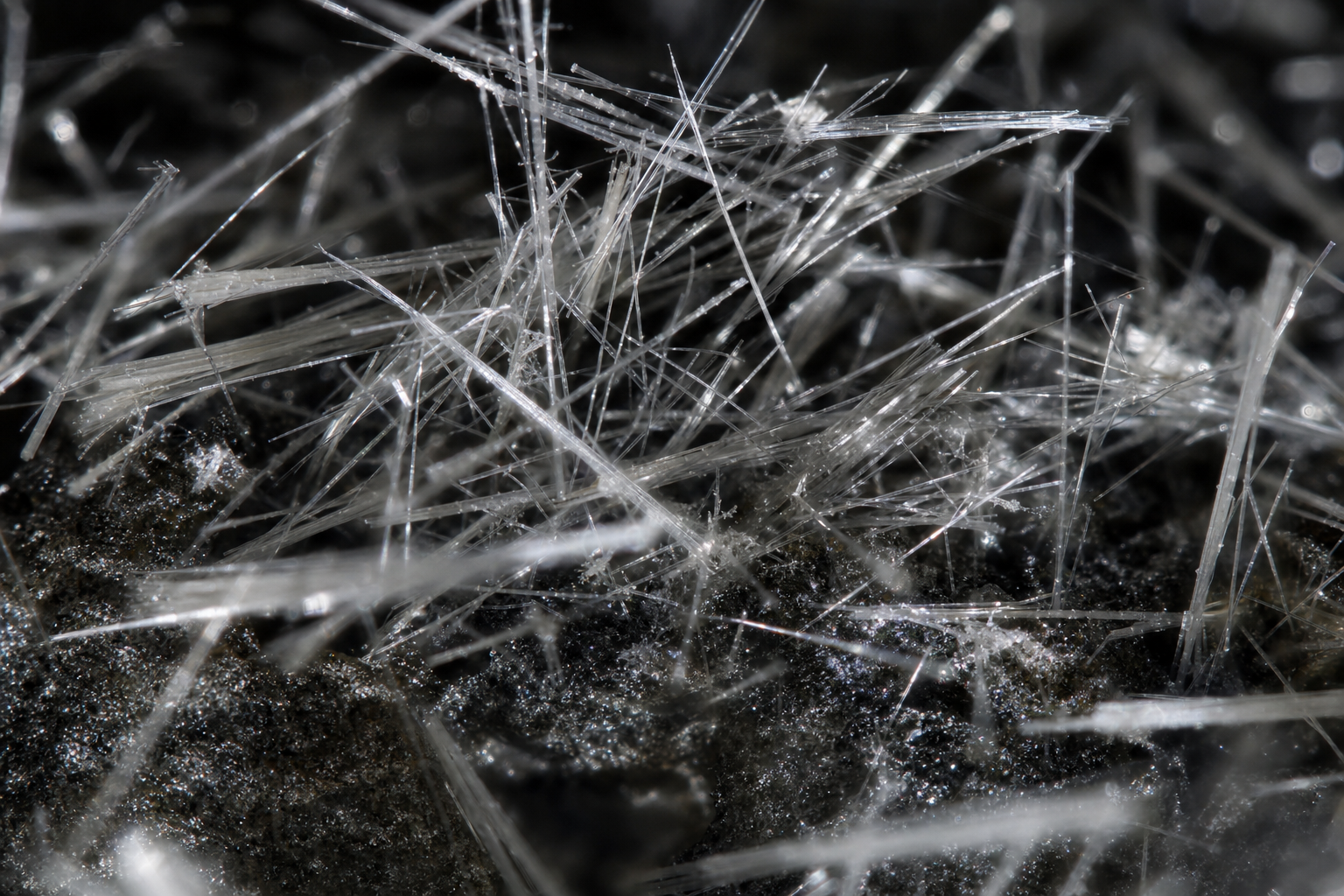
The most important sentence on this page: Don't unzip the outer cover of any mattress unless you're certain it doesn't have a fiberglass fire barrier inside. If you're not sure, leave it alone. We'll show you how to find out.
If you found this page because of the recent Nectar or Zinus headlines and you're wondering whether your own mattress is part of the problem, here's the short version before the long one.
About 1 in 10 mattresses sold in North America has a fiberglass fire sleeve sewn inside. As long as the cover stays on, it stays put. Almost every horror story in the news started with someone unzipping a cover, usually to wash it after a spill, and almost always because the manufacturer's own care instructions encouraged cover removal for laundering. When that happens, fiberglass gets everywhere, and it is genuinely awful to clean up. That mismatch — between what the care instructions told consumers to do and what the cover was actually protecting them from — is the core allegation in the lawsuits.
The rest of this guide is for the worried reader who wants the whole picture. How to check the mattress you already own. What to do if it does contain fiberglass. What to do if you've already removed a cover and there's something shiny on the carpet. How to check before you buy. What the lawsuits actually allege. And what the science says — honestly — about exposure.
We are not here to sell you a mattress. We don't take affiliate commissions on any of this. We are here because the existing publications on this topic either soft-pedal the problem to protect their advertising relationships or alarm the reader to drive engagement, and somebody should be doing the in-between version.
How to check the mattress you already own
Every mattress sold in the US and Canada is required by law to carry a tag, sewn into the side seam, that lists every material inside by percentage. It's called a law tag — a weirdly Victorian phrase for what is essentially the mattress's nutrition label.
Find it. Pull the bedding back. The tag is usually on one of the long sides near a corner, about the size of an index card.
Read the fill list. You're looking for one of these words:
- "Glass fiber" or "fiberglass" — your mattress contains fiberglass. Usually somewhere between 5% and 25%.
- "Silica strands," "silica fiber," or any term with silica in it — same thing, different name. Some manufacturers prefer the silica wording because it sounds less alarming. It is the same material.
- "Wool," "rayon," "viscose rayon," "modacrylic," or "aramid" — non-fiberglass fire barriers. You're fine on this front.
- Tag missing, faded, or unreadable — assume it might contain fiberglass and don't unzip the cover. Check the manufacturer's website or contact customer service.
If you can't find the tag or it's gone, look up the brand and model online. Most manufacturers publish their material specs somewhere on their site. If they don't, email customer support and ask in writing: "What is the fire barrier material in [model name]? Does it contain fiberglass or glass fiber?" Save the response. The brands that won't answer plainly are giving you information by their silence.
What to do if your mattress does contain fiberglass
Take a breath. You don't need to panic and you don't need to immediately replace it.
A fiberglass-containing mattress with the outer cover intact is not actively releasing fiberglass into your home. The fire sleeve is engineered to stay enclosed. The horror stories you've read all start the same way: someone unzipped the cover.
So here's what to do:
Leave the outer zipper cover on. Permanently. Don't unzip to wash. Don't let a cleaning service unzip. Whatever the manufacturer's care instructions say about removing the cover for laundering — ignore them. The cover is the only thing keeping the fiberglass inside. If the care instructions ever encouraged cover removal, save that documentation; it's relevant if you ever pursue a claim.
For spills, blot from the outside. Damp cloth on the surface of the cover. If the spill is deep enough that you'd need to get underneath the cover to clean it, the honest answer is the mattress probably needs to be replaced rather than salvaged. Sealing a wet interior back under a cover creates worse problems than the spill.
Use a separate, washable mattress protector on top. This is the right way to keep a fiberglass mattress clean. Don't disturb the cover, do protect it from above with something you can take off and wash. A good waterproof protector runs $30–$80 and pays for itself the first time something happens.
When you do eventually replace the mattress, dispose of it carefully. Don't cut it open. Don't strip it for parts. Many cities have mattress recycling programs that handle this properly — Vancouver, Calgary, Toronto, and most major US metros have one. If you have to put it out for trash, wrap it in plastic sheeting and tape the seams.
If you sleep on it every night with the cover undisturbed, the practical risk based on what's currently known is low. Almost every documented incident involves cover removal, not normal use.
What to do if you've already removed the cover
This is the worst-case scenario, and it's the one most of the lawsuits involve. If you're reading this because you unzipped a cover, exposed a fiberglass sleeve, and now there are tiny shiny fibers on your skin or your bedding or the floor — here's what to do, in order.
Don't use a regular vacuum. Standard vacuums redistribute fiberglass through the home and often blow fibers right out the exhaust. You need a HEPA-filtered vacuum, ideally rented for the cleanup if you don't own one.
Don't dry-sweep with a broom. Sweeping aerosolizes the fibers into the air, which is exactly what you don't want. Use a damp microfiber mop on hard floors and HEPA-vacuum carpets and upholstery instead.
Wear long sleeves, long pants, gloves, an N95 or P100 respirator, and eye protection while you clean. This is what NIOSH recommends for fiberglass cleanup. It is not over-cautious. The cleanup is genuinely irritating to skin and lungs without protection, and you'll regret skipping it.
Bag the affected mattress and bedding in heavy plastic. Don't move anything through the house uncovered. A sleeve that's been disturbed will keep shedding fibers. The mattress itself probably can't be salvaged at this point, and trying to re-seal the cover usually makes things worse, not better.
Check your HVAC system. This is the underestimated part. If the contamination has been in the home for more than a few days — especially with central heating or air conditioning running — fibers will have entered the return air vents and circulated through ductwork. They land in rooms the mattress was never in. HVAC ductwork cleaning by a professional service is often necessary in moderate-to-severe contamination cases, and it's the line item people most often miss when they think the cleanup is finished. If you're seeing fiber-like glints on surfaces in rooms far from the bedroom, the HVAC system has been involved.
If you have children in the home, keep them out of contaminated areas until cleanup is complete. Don't let them play near the affected mattress or in rooms where you're still finding fibers on surfaces. Wash any crib or toddler-bed bedding separately from the rest of the laundry, and consider replacing soft toys that were in the contaminated room rather than trying to clean them. Children's skin and respiratory tracts respond to fiberglass irritation more strongly than adults' do, and they're less able to communicate that something is bothering them.
Document everything before cleanup if there's any chance of a claim. Photograph the disturbed mattress, the affected rooms, the fiber distribution. Save the manufacturer's care instructions — particularly any that mentioned cover removal for cleaning. Save your purchase receipt. Cover removal almost always voids the manufacturer's warranty, which is part of why the lawsuits exist — the warranty was structured to discourage the discovery of what was inside. Document early; the situation only gets harder to reconstruct later.
For severe contamination, hire professional remediation. Several companies now specialize in fiberglass-from-mattress cleanup. Costs run from a few hundred dollars for surface cleaning to several thousand for whole-home jobs that include HVAC ductwork. If you're documenting the situation for a potential class action claim, photograph everything before cleanup begins.
Talk to a doctor if you have symptoms. The most common ones — itching, eye irritation, sore throat, short-term coughing — are documented in ATSDR's toxicological profile and usually resolve once exposure ends. Persistent respiratory symptoms warrant medical attention.
If you think you have a case worth joining, the active Nectar litigation summary lists the plaintiff law firm contacts. We are not lawyers and we cannot give you legal advice. We can tell you that documenting everything early is what makes claims provable later.
How to check before you buy
If you're shopping for a new mattress and want to avoid this whole situation, here's what to look for and what to ask.
On the manufacturer's website, search the product page for the words fire barrier, fire sock, flame barrier, or flame retardant. Brands that don't use fiberglass tend to advertise this fact loudly because they know consumers care. Brands that do use it tend to be quiet about how their flammability standard is met.
The brands that publish complete material breakdowns — Avocado, Naturepedic, My Green Mattress, Birch, Saatva — make this easy. You can read their disclosures in five minutes and know exactly what's inside. If a brand's website only says "uses only safe materials" without specifics, that's a yellow flag, not a deal-breaker, but worth following up on.
Look for these certifications. None of them allow fiberglass in their certified products:
- GOTS (Global Organic Textile Standard) — for cotton and wool components.
- GOLS (Global Organic Latex Standard) — for latex.
- MADE SAFE — broader chemistry-safety certification covering the full mattress.
- GreenGuard Gold — doesn't prohibit fiberglass directly, but tests emissions over a 14-day window (longer than CertiPUR-US's 72 hours).
CertiPUR-US is foam-only. It tells you nothing about the fire barrier. A CertiPUR-US-certified mattress can absolutely contain fiberglass underneath the foam it certifies. This is one of the most consequential misunderstandings in mattress shopping, and we wrote a whole piece on it.
A note on price: fiberglass-free mattresses with documented certifications generally start around $800–$1,200 for a queen at the cheapest end. True natural-rubber-and-wool builds run $1,800–$4,000+. Below about $400 for a queen, fiberglass becomes very likely because no other fire barrier material is economical at that price point.
This is not a moral judgment. It's the reality of what the federal flammability standard costs to meet, and the cheapest way to meet it is fiberglass. If $400 is your ceiling, the legitimate options are: accept a fiberglass mattress and never unzip the cover, buy used from a seller who can confirm what's inside, or wait and save until you can move up a tier. Each is a real choice.
What the lawsuits actually allege
Nectar (April 2026, ongoing). A proposed class action against Resident Home LLC, Nectar's parent company. It names four models — Classic, Premier, Luxe, Ultra — and the ClassAction.org case summary lays out the allegations: the mattresses contain woven fiberglass fire sleeves, the law tag says "Glass Fiber 23%," and consumers encouraged by Nectar's product materials to remove the cover for cleaning did so — exposing the fiberglass and contaminating their homes. The disclosure inadequacy is the heart of the allegation: the law tag had the information, but the marketing and product instructions didn't warn plainly about either the fiberglass or the risk of cover removal — and in some cases actively encouraged the removal that caused the harm.
Zinus (2022, settled August 2023). A similar class action made comparable allegations across a broader range of Zinus mattresses. It was dismissed without prejudice after a private settlement. Terms aren't public. Plaintiff attorneys reported representing over 2,000 individuals with claimed injuries.
A class action complaint is not a finding of fact — it's an allegation. The legal process determines what's proven. What is not contested in any of these cases is the underlying material: fiberglass is in the mattresses; the fight is about disclosure and the resulting harms.
Why fiberglass is in mattresses to begin with
Every mattress sold in the United States must pass a federal flammability test codified at 16 CFR Part 1633, in effect since 2007. The standard exists for a real reason: mattress fires were causing hundreds of deaths per year in the United States, and federal regulators concluded the flammability of mattress foam was a significant contributor. The standard saved lives. The framing here is not anti-flammability-standard. It's pro-disclosure about how individual manufacturers chose to meet it.
The standard doesn't specify how a mattress has to achieve flame resistance. Manufacturers have three real options:
- Chemical flame retardants. Brominated and chlorinated compounds applied to foam or fabric. Effective. Cheap. Several have been linked to documented health concerns — and contribute to how foam off-gasses over time.
- Naturally flame-resistant fibers. Wool, viscose rayon, modacrylic. Effective. More expensive. The default in higher-priced certified-organic mattresses.
- Woven fiberglass. A fire sleeve made of glass fibers. Effective. Cheapest of the three.
A 2026 NapLab analysis of 395 mattresses found roughly 10% — 36 of 395 — contain fiberglass. Almost all the fiberglass mattresses are in the under-$400 price tier. California has decided to remove this option: AB 1059 bans the sale of mattresses containing textile fiberglass, effective January 1, 2027. New York has introduced a similar bill. The federal CPSC has not announced anything similar.
What the science actually says
The fibers in mattress fire sleeves are technically called synthetic vitreous fibers. The CDC's Agency for Toxic Substances and Disease Registry maintains a public toxicological profile for these fibers. Here's what's actually established: Peer-reviewed
- Short-term exposure causes irritation. Skin itching, eye irritation, sore throat, and upper respiratory irritation are well-documented and reversible once exposure ends.
- Worker cohort studies are mixed. ATSDR notes that workers in factories making fiberglass for home insulation "showed no increased rates of lung problems," while some refractory ceramic fiber workers showed chest x-ray changes.
- The IARC reviewed the evidence in 2002 and reclassified most synthetic vitreous fibers — including the ordinary glass fiber used in mattresses — as Group 3: not classifiable as to carcinogenicity in humans.
In plain terms: working in a fiberglass factory at industrial concentrations is associated with respiratory irritation and possible lung function changes. The hazard of sleeping on a fiberglass mattress with the cover intact is not the same hazard.
The honest gap: there is no peer-reviewed study, that we can locate, of fiberglass exposure specifically from consumer mattress products in household settings. The occupational evidence is the closest available proxy. This is a real limitation in the science, and it's one of the reasons publications like ours exist — to be honest about where the evidence runs out. Speculation
What we will and will not say
We are not going to claim that any specific mattress in any specific home is harming the people sleeping on it. The available evidence does not support that claim, and we are not in the business of telling you to be afraid of your bed.
What we will say: about 1 in 10 mattresses sold in North America contains fiberglass, concentrated in the under-$400 price tier. A fiberglass mattress with the cover intact is, by all available evidence, low-risk for routine use. A fiberglass mattress with the cover removed has caused documented home contamination, cleanup costs in the thousands, and short-term symptoms in residents.
The single most useful thing you can do is know what's in your mattress, and not unzip the outer cover if it contains fiberglass. If you came to this page wondering whether you need to do something about your mattress: check the law tag. If it's fiberglass-free, you have no fiberglass-specific concern, though chemistry has other dimensions we cover elsewhere. If it does contain fiberglass, leave the cover on, use a separate washable protector on top, and you have substantially eliminated the practical risk.
This is part of an ongoing series at Embr Sleep on the regulatory and litigation landscape shaping mattress chemistry. Our methodology and editorial commitments are published openly. If this guide was useful, share it with someone who's mattress-shopping or worried about the one they own.
Frequently asked questions
Does the Nectar mattress contain fiberglass? +
Yes. According to a 2026 class action lawsuit, several Nectar models — Classic, Premier, Luxe, and Ultra — contain a woven fiberglass fire sleeve. The law tag lists Glass Fiber at approximately 23% of total fill. The suit alleges Nectar's product materials encouraged cover removal for cleaning without adequately warning consumers about the fiberglass inside.
How do I know if my mattress has fiberglass? +
Find the law tag sewn into the side seam and look for "glass fiber," "fiberglass," or "silica fiber" in the fill list. These terms all refer to the same material. If present, do not remove the outer cover under any circumstances. See the full guide above for what to do next. You can also check NapLab's database of 395 mattresses analyzed for fiberglass content.
What happens if you unzip a mattress with fiberglass? +
Removing the outer cover releases glass fibers into the home, contaminating bedding, carpets, furniture, and HVAC systems. Cleanup requires a HEPA-filtered vacuum, protective gear including an N95 respirator (per NIOSH guidance), long sleeves, gloves, and eye protection. In severe cases, professional remediation is necessary. The mattress itself usually cannot be re-sealed and should be disposed of carefully — bagged in heavy plastic, unsealed seams taped.
Is fiberglass in mattresses dangerous? +
The ATSDR toxicological profile for synthetic vitreous fibers documents skin irritation, eye irritation, and upper respiratory irritation as well-established short-term effects. The IARC classified ordinary glass fiber as Group 3 — not classifiable as to carcinogenicity in humans — in its 2002 review. A fiberglass mattress with the cover intact presents low practical risk based on available evidence. The documented harms almost universally involve cover removal.
Which mattress brands use fiberglass? +
A 2026 NapLab analysis of 395 mattresses found approximately 10% contain fiberglass, concentrated in the under-$400 price tier. Brands named in lawsuits include Nectar (class action filed April 2026) and Zinus (settled August 2023). Check your own mattress's law tag — or ask the manufacturer in writing what fire barrier material their product contains.
Will fiberglass mattresses be banned? +
California passed AB 1059 banning the sale of mattresses containing textile fiberglass, effective January 1, 2027. New York has introduced similar legislation. The federal CPSC has not announced a nationwide ban as of 2026.
Does removing the cover void the warranty? +
Almost always, yes. Most manufacturer warranties explicitly require the cover to remain in place, even though some manufacturers' care instructions simultaneously suggest removing it for laundering — a contradiction that is part of what the class actions allege. If you've already removed the cover, document everything you can before cleanup, including the original care instructions.
Should I worry about HVAC contamination? +
If the contamination has been in the home for more than a few days with central heating or air conditioning running, fibers may have entered the return air system and circulated through ductwork to other rooms. If you're seeing fiber-like glints on surfaces in rooms the mattress was never in, the HVAC system is likely involved. Professional ductwork cleaning is often necessary in moderate-to-severe cases and is the line item most commonly missed when households think cleanup is finished.
Has fiberglass always been in mattresses? +
It's been the dominant cheap-tier fire-barrier solution since the federal flammability standard 16 CFR Part 1633 took effect in 2007 — almost two decades. Most consumers had never heard of it before about 2022 because there was no required disclosure beyond the law tag, which is hard to read and almost never referenced in marketing materials. The recent wave of public awareness is not new contamination; it's existing contamination that the legal system finally surfaced.
- ClassAction.org, "Nectar Mattresses Can Leak Toxic Fiberglass, Class Action Lawsuit Alleges," April 23, 2026. classaction.org
- ClassAction.org, "Class Action Claims Zinus Mattresses Can Expel Fiberglass," settled August 2023. classaction.org
- Code of Federal Regulations, Title 16, Part 1633. ecfr.gov
- California Department of Public Health, Factsheet on Fiberglass and Mattresses. cdph.ca.gov
- Sleep Products Association, "Bill to Ban Mattresses That Contain Fiberglass Introduced in New York," April 2025. sleepproducts.org
- ATSDR, Toxicological Profile for Synthetic Vitreous Fibers. atsdr.cdc.gov
- NIOSH, Fibrous Glass — About, March 2026. cdc.gov/niosh
- NapLab, List of Mattresses With Fiberglass — 395 Mattresses Analyzed, March 2026. naplab.com
- Chen, C-H. et al. (2020). Respiratory health effects of the fiberglass-reinforced plastic lamination process. Scandinavian Journal of Work, Environment and Health. sjweh.fi
- Boskabady, M.H. et al. (2013). Assessment of health effects related to fiber glass exposure in production workers. Iranian Journal of Public Health. pmc.ncbi.nlm.nih.gov
Discussion