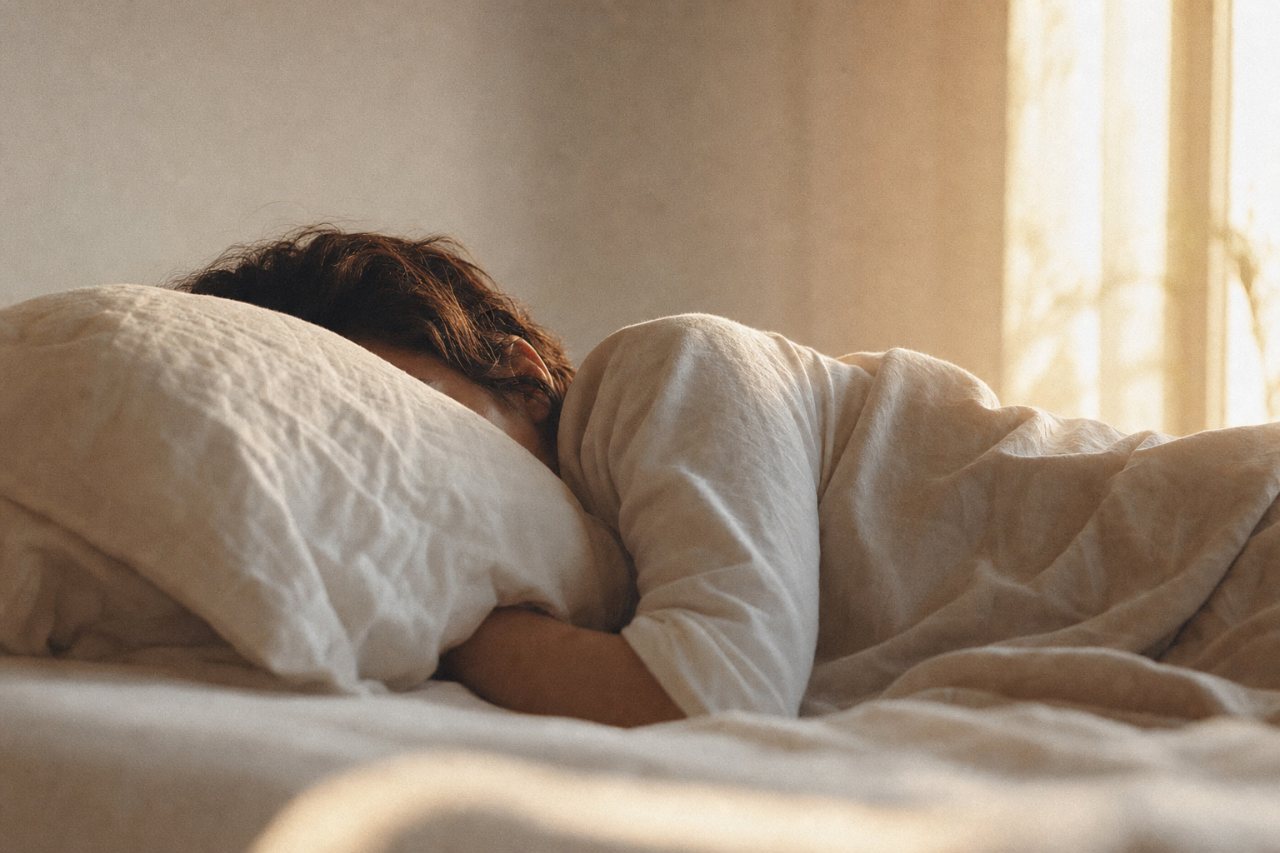
Why are hotel beds so comfortable, and why do you sleep better in hotels than you do at home? Almost everyone has had this experience. You check into a hotel room, maybe not even a particularly nice one, fall asleep in an unfamiliar bed, and wake up feeling more rested than you have in weeks. You go home and the feeling disappears.
Most explanations for this focus on the psychological: you were on vacation, you weren't thinking about work, you left your routine behind. All of those things matter. But there's a physical explanation that almost never gets discussed — and it has to do with the chemistry of the room you sleep in, not the thread count of the sheets.
The obvious explanations — and their limits
The standard explanations for the hotel sleep effect are real, and it would be dishonest to dismiss them. You may be on holiday, which means the cognitive off-switch actually works. You probably aren't sleeping next to a partner who kicks or a pet who relocates at 3 a.m. The pillow might be a different firmness than you're used to — sometimes that's enough. The room is often cooler, which supports sleep onset and quality. Novelty itself can reduce hyperarousal in people who lie awake cycling through familiar anxieties in a familiar room.
These are legitimate contributing factors. But here's the problem: the hotel sleep effect also happens when none of them fully apply. It happens in a business hotel on a Tuesday night when you're stressed about a presentation the next morning, sleeping alone in an average room, on a mattress that isn't particularly different from yours at home. The psychological explanation doesn't cover that case cleanly. Something else is happening.
The mattress you sleep on at home is years old
Hotel mattresses are typically replaced every 3–5 years as a matter of policy. It's a standard line item in hotel operations, driven partly by guest comfort standards and partly by the economics of commercial use. The average consumer, by contrast, sleeps on the same mattress for 7–10 years before replacing it — and many people go longer than that.
This matters for reasons that go beyond the familiar question of off-gassing from new mattresses. A new mattress does off-gas — mostly from the polyurethane foam, which releases a range of volatile organic compounds in its first weeks. That initial peak is real and well-documented. But once a mattress has aged past that peak window, the question changes: it's no longer what is this mattress releasing, but what has it absorbed?
Polyurethane foam acts as a chemical sink over time. The same properties that make it a VOC source when new — its porous structure, its large surface area — make it a long-term absorber of compounds from room air. Phthalates from flooring and personal care products. Fragrance compounds from air fresheners and laundry detergents. Chemicals tracked in from outdoors. After 7 years, the mattress contains a chemical record of the environment it has lived in. Peer-reviewed for sink function Inferred for 7-year accumulated profile vs hotel mattress
The hotel mattress — even if it isn't especially well-made — is a recent mattress. It hasn't had time to accumulate that record. For a primer on how mattress off-gassing evolves over time, including the difference between new-mattress VOC peaks and the longer-term sink dynamic, we've covered the chemistry in detail elsewhere on this site.
Hotel rooms have different ventilation
Most hotels use dedicated HVAC systems that actively exchange indoor air with outdoor air, not just recirculate existing room air. Many hotel rooms have their own air handling unit — a window or wall unit you can hear cycling on and off — that pulls air from outside and exhausts stale air. The ventilation design in commercial hospitality settings is often substantially better than what most residential bedrooms receive.
Your home bedroom, by contrast, is typically served by the same HVAC system as the rest of the house, which in most North American homes recirculates a significant proportion of existing indoor air. When that system runs overnight in a sealed bedroom, it's moving the same air around. Compounds accumulating from the mattress, bedding, off-gassing furniture, and your own body chemistry don't leave the room — they circulate through it.
A 2024 study by Molinier and colleagues in Environmental Science & Technology found 94 compounds substantially elevated in bedroom air during sleep compared to other rooms in the same home. The bedroom during sleep is a distinct chemical environment — not just slightly different from the rest of the house, but measurably more chemically loaded. Peer-reviewed for bedroom VOC accumulation Inferred for hotel vs home ventilation comparison
A hotel room that was cleaned, aired, and had fresh air exchanged before your arrival starts the accumulation process fresh. Your bedroom at home has been accumulating since the last time you opened a window. That's the comparison that matters.
No personal chemistry load
This is the part that surprises people the most. The hotel mattress and bedding haven't absorbed years of your skin oils, bioeffluents, personal care products, and whatever compounds you've tracked in from work or outdoors. Research on polyurethane foam shows it absorbs semi-volatile organic compounds (SVOCs) from direct contact over time — the same chemistry you deposit nightly through sweat, skin contact, and the products on your body before sleep. Peer-reviewed for foam absorption
Your own mattress at home carries years of your chemistry — and the chemistry of anyone else who has slept in it. You're re-encountering that accumulated record every night, in a closed room, for 7–8 hours.
The hotel mattress has someone else's chemistry, which sounds unappealing but is actually less relevant than it might seem. It's recent, and it reflects a brief stay. The person who slept there before you checked out the same morning the housekeeping team stripped the bedding, aired the room, and reset the accumulation clock. That is genuinely different from sleeping on a surface that carries seven years of you. Inferred for the personal chemistry load comparison
What this tells you about your sleep environment at home
The hotel experience is a natural experiment. When the variables are held roughly constant — same person, similar sleep duration, comparable stress levels — and sleep quality is dramatically better somewhere else, the environment is worth examining. You have, without planning to, run a controlled test of your own bedroom.
The things that make hotel sleep better are not mysterious. They're structural, and they're largely addressable at home:
- Ventilate the bedroom. Actual fresh air exchange before sleep — open a window, not just the HVAC. This is the single highest-impact change most people can make with no cost. The 2024 ACS study documents how rapidly bedroom air chemistry builds during sleep; working from a clean baseline is the most direct way to reduce that accumulation.
- Consider your mattress age. If your mattress is over 7–8 years old, its chemistry profile has changed significantly from when it was new. No certification — CertiPUR-US or otherwise — covers an aged mattress. Certifications test new foam; they say nothing about what a mattress has absorbed over the years you've slept on it.
- Open the window during the day. Regular fresh air exchange prevents the chronic accumulation that makes home bedrooms chemically distinct from hotel rooms. A bedroom that airs daily doesn't build the same chemical load as one that's sealed year-round.
- Wash bedding regularly. Pillowcases especially. Direct skin-contact surfaces accumulate personal chemistry fastest, and a clean pillowcase is the cheapest intervention with the most direct relationship to what you're breathing near for 8 hours a night.
These are not exotic or expensive interventions. They're the hotel effect, reverse-engineered. If you want to understand the broader concept of the Sleep Micro Environment — the closed bedroom during sleep as a distinct chemical air quality environment — we've written about it at length. And if you want a practical starting point for evaluating your own sleep environment, what to look for when evaluating your sleep environment covers the assessment from the ground up.
The one thing hotels can't replicate
This piece would be dishonest if it didn't acknowledge the reverse argument. Hotel mattresses, whatever their age advantages, are typically conventional polyurethane foam with no special certifications. They're built to a commercial price point and replaced on a schedule, not chosen for material quality. If you sleep on a carefully selected mattress — certified foam, natural fire barrier, good material transparency from the manufacturer — in a bedroom you ventilate regularly, you may already be sleeping in a better chemical environment than most hotel rooms can offer.
The hotel effect is a signal, not a prescription. What it's telling you is that the chemistry of your sleep environment matters, and that your home bedroom — accumulated over years, sealed every night, rarely thought about as an air quality environment — may not be optimised for sleep the way it could be. The solution isn't to live in hotels. It's to understand what hotels are doing differently and replicate it deliberately.
The hotel bed probably isn't better than your bed at home. The hotel room is probably better than your room at home — because it's newer, better ventilated, and hasn't been accumulating your personal chemical environment for years. That's the real answer to why you sleep better in hotels. And it's one you can actually do something about.
If you suspect your sleep environment is contributing to other symptoms, our pieces on non-restorative sleep and waking up with headaches cover related ground with the same evidence-tagged approach.
Frequently asked questions
Why do I sleep better in hotels than at home? +
Multiple factors contribute: hotel mattresses are typically newer (replaced every 3–5 years vs 7–10 years at home), hotel rooms often have better fresh-air ventilation systems, and hotel bedding hasn't accumulated years of personal chemistry. A 2024 study published in Environmental Science & Technology found 94 compounds substantially elevated in bedroom air during sleep — a hotel room that was freshly aired starts this accumulation process from zero.
Is it psychological why I sleep better in hotels? +
Psychological factors — reduced work stress, novelty, vacation mindset — are real contributors. But the physical differences are also documented: newer mattresses, better ventilation systems, and no personal chemistry accumulation in the sleep surface. Both factors likely contribute. The fact that the hotel effect occurs even on stressful business trips suggests the physical environment plays a role independent of psychological state.
Do hotel mattresses off-gas less than home mattresses? +
Hotel mattresses are typically replaced on a 3–5 year cycle, meaning they're generally newer than the average home mattress (used 7–10 years). Newer mattresses have passed the initial peak off-gassing window. However, older mattresses that have been accumulating room chemistry for years present a different exposure profile — not simply more off-gassing, but a changed chemical character from years of absorption as a sink material. See our piece on how mattress off-gassing evolves over time.
What can I do to sleep better at home like I do in hotels? +
Three evidence-informed steps: (1) Ventilate the bedroom with fresh air before sleep rather than just running HVAC recirculation — the single highest-impact, zero-cost change most people can make. (2) If your mattress is over 7–8 years old, consider whether it may be contributing to your sleep environment's chemistry. (3) Wash bedding regularly — pillowcases especially, as direct skin-contact surfaces accumulate personal chemistry fastest.
Why does bedroom air quality matter for sleep? +
A 2024 ACS study found 94 compounds substantially elevated in bedroom air during sleep versus other rooms in the same home. The closed bedroom accumulates VOCs from the mattress, bedding, body heat, breath, and skin chemistry overnight. Hotel rooms with dedicated fresh-air ventilation start this accumulation fresh for each guest — unlike a home bedroom that may not have had a window opened in days. This is the concept behind the Sleep Micro Environment.
- Molinier B, Arata C, Katz EF, Lunderberg DM, Ofodile J, Singer BC, Nazaroff WW, Goldstein AH (2024). Bedroom Concentrations and Emissions of Volatile Organic Compounds during Sleep. Environmental Science & Technology 58(18):7958–7967. PMID 38656997. pmc.ncbi.nlm.nih.gov/articles/PMC11080066 Peer-reviewed
- Kim, K. et al. (2021). Evaluating couch polyurethane foam for a potential passive sampler of semivolatile organic compounds. Chemosphere, 271:129349. Documents polyurethane foam acting as a reservoir (sink) for SVOCs. pubmed.ncbi.nlm.nih.gov/33429263 Peer-reviewed
- Consumer Product Safety Commission (2023). Mattress replacement guidelines — commercial and residential patterns. Referenced in trade and industry contexts; primary source: ISPA Mattress Industry Report. Industry
- WHO (2010). WHO Guidelines for Indoor Air Quality: Selected Pollutants. World Health Organization. who.int/publications/i/item/9789289002134 Regulatory
- EPA (2022). An Introduction to Indoor Air Quality — Volatile Organic Compounds. U.S. Environmental Protection Agency. epa.gov/indoor-air-quality-iaq/volatile-organic-compounds-impact-indoor-air-quality Regulatory
- Missia, D.A. et al. (2010). Indoor exposure from building materials: a field study. Atmospheric Environment. SVOC absorption into porous building materials and furnishings. DOI 10.1016/j.atmosenv.2010.07.049 Peer-reviewed
- Embr (2026). How Mattress Off-Gassing Works — and What Changes After Year One. embrsleep.com/articles/off-gassing
Discussion