A child aged four or under spends as much as 18 hours a day in what researchers call the sleeping microenvironment — the small pocket of crib, mattress, bedding, and the warm air directly around them. In 2025, a team at the University of Toronto published two companion studies asking a simple question about that pocket: what chemicals are in it, and where are they coming from? This is a plain-language walkthrough of what they actually found. We've laid the studies out as they are, with the numbers, so you can see the evidence rather than take our word for it.
Both studies came out of Sara Vaezafshar's PhD work in the lab of Prof. Miriam Diamond, with co-authors including Arlene Blum of the Green Science Policy Institute. They were funded by the University of Toronto, an Ontario Graduate Scholarship, and Canada's federal science agency (NSERC) — not by industry.
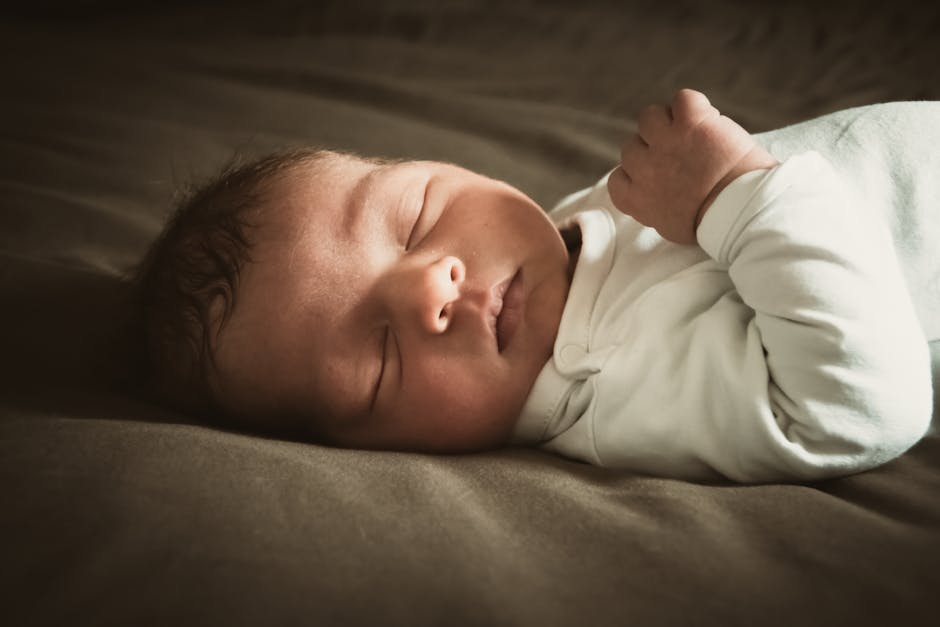
Study one: what's in the mattress, and what comes out of it
The first study tested 16 new children's foam mattresses bought from major North American retailers between 2021 and 2024, in the price range most families actually shop in — about CAD $50 to $105. They were all foam, no springs.
In those 16 mattresses, the researchers detected 21 different SVOCs — semi-volatile organic compounds — across four chemical families: ortho-phthalates (plasticizers), organophosphate esters (a class of flame retardants and plasticizers), and two groups of UV-filters (benzophenones and salicylates).
Some specific findings are worth stating exactly:
- One mattress exceeded Canada's regulatory limit of 0.1% by weight for di-n-butyl phthalate (DnBP) in children's mattresses.
- Five mattresses contained more than 0.1% of other phthalates — DiBP, DnOP, and DiNP — which are restricted in children's toys in Canada but not in mattresses, a gap the authors flagged.
- One mattress contained high levels of TCEP, a flame retardant that has been banned in Canada since 2014 for use in foam products for children under three.
- Five mattresses contained 1% to 3% by weight of various organophosphate ester flame retardants.
- Two of the mattresses carried safety certifications. One of those still contained several phthalates and flame retardants; the other complied with all regulations — a useful reminder that a certificate is not a guarantee, but also that compliant products do exist.
Then the researchers did something most testing never does: they measured what the mattresses actually release under sleep conditions. They warmed the mattresses to body temperature (37.5 °C / 99.5 °F) and applied weight simulating a sleeping infant (7.5 kg / about 16.5 lb), and watched emissions climb. Heat and weight together drove emissions up sharply, with heat the larger factor. The clearest example: the flame retardant TBOEP was released from all the mattresses once both body heat and weight were applied — compared with only three of them at room temperature. The plasticizer DEHP behaved the same way. In other words, the conditions of a child actually sleeping on the mattress are exactly the conditions that get the most chemistry moving out of it.
Study two: what reaches children in real bedrooms
The first study was done in the lab. The companion study went into homes — 25 bedrooms of children aged 6 months to 4 years, in Toronto and Ottawa — and used passive samplers to measure the same families of chemicals in three places: the general bedroom air, the sleeping microenvironment right around the child, and directly at the mattress.
Across those three zones they detected 28, 31, and 30 compounds respectively. Two findings stand out:
- The air right around the sleeping child held higher concentrations than the general bedroom air — meaning the place a child actually breathes for the night is more loaded than a reading taken from across the room would suggest.
- For several phthalates and flame retardants, levels were highest right at the mattress — which is how the researchers confirmed the mattress itself was a source of those compounds, not just a bystander in a contaminated room. (One flame retardant, TBOEP, was higher in the broader sleep area than at the mattress, pointing to bedding and other textiles as its source instead.)
Put together, the two studies make a single coherent point: these chemicals are in inexpensive children's mattresses, they come out faster under the heat and weight of a sleeping child, and they show up in the air children breathe while they sleep.
What the researchers said
The senior author, Prof. Diamond, framed it bluntly, calling the results a wake-up call for manufacturers and policymakers and saying the research suggests many mattresses contain chemicals that could affect children's brain development. Co-author Arlene Blum made a related point about the flame retardants specifically: that they were turning up in children's mattresses despite having no demonstrated fire-safety benefit there and not being needed to meet flammability standards in the first place.
It's worth holding those two statements at the right distance, which we'll do honestly in the next section.
What these studies do — and don't — show
This is the part where it's easy to overstate, so we won't.
What they show: that low-cost children's mattresses commonly contain phthalates and flame retardants; that some exceed regulatory limits or contain a chemical already banned for young children; and that body heat and weight increase how much of this reaches a sleeping child. Those are measurements of what's present and what's emitted — and they're solid.
What they don't show: that any particular child was harmed by their mattress. These studies measured chemicals and exposure, not health outcomes. The reason exposure to these chemical families is a concern at all comes from a separate body of research: the cohort studies linking, for example, prenatal flame-retardant exposure to small reductions in childhood IQ. In 2026, an analysis of the Canadian CHILD birth cohort (601 children) extended that kind of evidence to behaviour: infants with more TCEP, one of the flame retardants this very mattress testing flagged, in their house dust had higher odds of clinically significant behavioural problems by age five, with the association strongest in boys (Foster et al. 2026). Detecting a chemical in a mattress, or even in a child's body, is not the same as proving it caused harm. We hold to that distinction, and so should anyone reading these headlines.
A few more honest caveats: the studies are small (16 mattresses, 25 homes) and recent, which makes them a strong early signal rather than the last word. And not every mattress is a problem — remember that one of the two certified mattresses complied fully. The takeaway isn't panic; it's that "passes the flammability standard" and "free of chemicals you'd want to keep away from a sleeping baby" are not the same statement.
What a parent can reasonably take from this
The study authors' own practical suggestions were modest and sensible: look for mattresses labelled flame-retardant-free, and be cautious about vinyl (PVC) covers, which the in-home study tied to some of the phthalate exposure. It's also worth knowing that airing out a new mattress helps with the smell — the fast-evaporating VOCs — but does little for SVOCs, which release slowly over months to years and aren't in the air to be aired out.
The honest complication is cost. Lower-emission and organic mattresses tend to carry a higher price tag, and that's a real barrier for most families — which is precisely the gap that bothers us, because the parents most exposed to these products are usually the ones with the least room in the budget to buy their way out.
Where Embr fits
This pair of studies is, in a sense, the clearest illustration of why we're building what we're building. The chemistry doesn't care whether a family can afford an organic mattress; it comes off the foam under the heat and weight of a sleeping body regardless. So rather than ask people to replace a mattress they can't easily replace, we're designing a passive capture layer that uses the mattress as a tool — a layer that sits at the surface, where the contact happens, and adsorbs what reaches it, then gets removed and replaced on a cycle so the captured load leaves the room instead of building up.
We're not claiming a mattress is making anyone sick, and we're not promising a health outcome. We're saying the evidence above is exactly why the sleep surface — the warm, loaded, hours-long point of contact these studies measured — is the sensible place to put a tool that simply intercepts.
The studies
- Vaezafshar, S.; Wolk, S.; Simpson, K.; Akhbarizadeh, R.; Blum, A.; Jantunen, L. M.; Diamond, M. L. "Are Sleeping Children Exposed to Plasticizers, Flame Retardants, and UV-Filters from Their Mattresses?" Environmental Science & Technology 2025, 59(16), 7909–7918. DOI: 10.1021/acs.est.5c03560.
- Vaezafshar, S.; Wolk, S.; Arrandale, V. H.; Sühring, R.; Phipps, E.; Jantunen, L. M.; Diamond, M. L. "Young Children's Exposure to Chemicals of Concern in Their Sleeping Environment: An In-Home Study." Environmental Science & Technology Letters 2025, 12(5), 468–475. DOI: 10.1021/acs.estlett.5c00051.
Both studies were conducted at the University of Toronto and funded by the University of Toronto, an Ontario Graduate Scholarship, and the Natural Sciences and Engineering Research Council of Canada. Quoted characterizations from Prof. Diamond and Dr. Blum are from the studies' public release materials and reflect the researchers' views, not a finding of the studies themselves.
This article is part of Embr's research series. It is not medical advice and does not promise health outcomes. Our methodology and editorial standardsThe Dose GapCorrections are published openly. If you find a factual error, tell us.