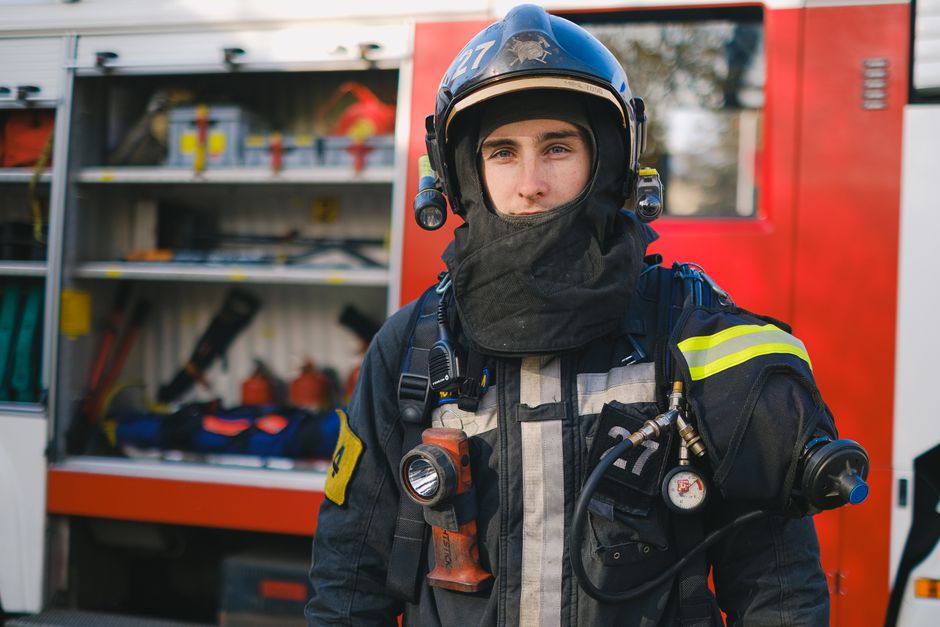
A firefighter works a night shift, catches a structure fire at two in the morning, and does everything right. Full turnout gear and breathing apparatus on the fireground. Gross decon at the scene. Gear stays at the hall, where it belongs. Shower, change, drive home at seven, get into bed beside their partner.
The gear never came home. The exposure did. Fent and colleagues measured firefighters suppressing controlled structure fires in full protective ensembles and found they still absorbed combustion products, most likely through the skin, with the neck — the part the ensemble covers least — the primary site. Benzene was measurably elevated in their breath afterwards7. Peer-reviewed You can leave the coat at the station. You cannot leave your skin there, and eight hours later it is pressed against a mattress for another eight.
A family in a wildfire-affected county evacuates for ten days. They come home after the air quality index says it's safe. The walls smell smoky. The carpet does too. By week three the smell in the living room is mostly gone, but the primary bedroom — the room with the closed door and the heavy bedding — still has the faint, persistent character of a fire that happened weeks ago and miles away. They sleep there anyway. There is nowhere else to sleep.
A young parent drops their child at a babysitter's house and notices over the course of a few weeks that the kid develops a mild wheeze that resolves at home and returns at the sitter's. The sitter is a nonsmoker. The previous tenant of the house was not.
These are not three separate problems. They are one chemistry mechanism applied to three different combustion sources. Across cigarettes, structure fires, and wildfires, the same sequence plays out indoors: combustion-derived semi-volatile compounds deposit onto walls and fabrics, react with ambient oxidants to form new compounds, and slowly re-emit back into the air over a timescale measured in weeks to months. The fibrous, porous, body-warmed surfaces in a bedroom concentrate this chemistry at the highest rates of any indoor environment a person spends time in.
This article is about what the peer-reviewed literature actually shows on that mechanism, where it is well-established, where it is still being characterized, and what the practical implications are for the room you sleep in. It is anchored in the body of research on third-hand smoke that has accumulated since 2009, the firefighter occupational-cancer literature that culminated in the 2022 IARC Group 1 reclassification1617, and the new generation of wildfire smoke indoor chemistry research that has emerged since 202325242833. These three literatures have converged on the same finding from three independent directions. The bedroom is the most consequential post-combustion exposure site most people have.
The fire goes out. The smoke clears. The chemistry stays.
What is third-hand smoke?
Smoke does not fill a room and then leave. It sticks. Walls, carpets, furniture and above all soft things — bedding, clothes, upholstery — hold onto what was in it, and keep holding on for weeks after the smell has faded.
That leftover residue is third-hand smoke. It matters for three reasons: some of it stays put for months, some of it changes into different compounds while it sits there, and some of it comes back off the surface into the air you are breathing.
What is in it, if you want the chemistry: nicotine, nitrosamines such as NNK, polycyclic aromatic hydrocarbons like naphthalene and pyrene, formaldehyde and other volatile organic compounds, and whatever has settled into the household dust. Each of those has its own page in the Atlas. Winickoff and colleagues named the pathway in 2009 and separated it from secondhand smoke, which is the smoke you breathe while someone is actually smoking1. Peer-reviewed
The chemical foundation for treating third-hand smoke as more than residual odor came one year later. Sleiman, Gundel, Pankow, Jacob, Singer, and Destaillats 2010 demonstrated in Proceedings of the National Academy of Sciences that nicotine adsorbed onto indoor surfaces reacts with ambient nitrous acid (HONO) to form tobacco-specific nitrosamines including NNK (4-(methylnitrosamino)-1-(3-pyridyl)-1-butanone), a potent carcinogen that was not present in the original smoke2. This was a category change in the science: the surfaces of a room previously occupied by smokers were not simply passive collectors of smoke residue. They were active sites of new carcinogen formation. Peer-reviewed
Independent work by Petrick and colleagues in 2010 documented how nicotine sorbs, desorbs, and undergoes oxidative transformation on indoor surfaces in the presence of ambient ozone — extending the surface-chemistry story beyond the HONO pathway and into the broader category of secondary product formation that operates in any indoor environment with normal background oxidants3. Peer-reviewed
The toxicological consequences came into focus through additional work. Hang et al. 2013 demonstrated in Mutagenesis that third-hand smoke extracts cause DNA damage in human cells, both single-strand and double-strand breaks, at doses consistent with realistic environmental exposures5. Tang et al. 2022 in Environmental Science & Technology quantified five distinct exposure pathways (inhalation, dust ingestion, dermal uptake, epidermal chemistry, and oral mucosal contact), each of which independently exceeded California's No Significant Risk Level for NNK at realistic third-hand smoke concentrations18. The exposure is not theoretical. Five separate routes deliver doses that are individually above thresholds set by a regulatory science agency. Peer-reviewed
The most striking single finding in the entire third-hand smoke literature comes from a 2019 paper by Whitlatch and Schick published in Nicotine & Tobacco Research, examining previously unpublished Philip Morris research from 1991 that had been preserved in tobacco industry archives. The original Philip Morris experiments tracked surface contamination from cigarette smoke over more than 100 days. Whitlatch and Schick reanalyzed the data and confirmed surface nicotine and tobacco-specific nitrosamine persistence for more than 50 days after smoking ended, with NNK concentrations in the room 110 days after the last cigarette that could exceed the mass of NNK that entered the room as smoke in the first place11. The room continued to generate new carcinogen long after the smoke itself had cleared. Peer-reviewed
The bedroom is where this chemistry has the most consequence. Schick et al. 2013, in Tobacco Control, demonstrated experimentally that the NNK-to-nicotine ratio on cotton cloth exposed to smoke was approximately 10-fold higher than the same ratio measured in the aerosol phase4. Cotton — the dominant fiber in sheets, pillowcases, and many mattress covers — preferentially concentrates the most carcinogenic fraction of the smoke. This is not a finding about peripheral surfaces in a smoker's home. This is a finding about the textiles pressed against a sleeping body for eight hours a night. Peer-reviewed
The mechanism in detail
Four steps, in order. Adsorption: smoke compounds land on walls, fabrics and dust and stick, with porous and fibrous materials holding the most. Transformation: what is on the surface reacts — surface nicotine plus ambient nitrous acid produces NNK, a carcinogen absent from the fresh smoke2, and ozone drives further oxidation3. Re-emission: the compounds come back off into the air, faster when the surface is warm25. Dust binding: a fraction migrates into settled dust, which is how it reaches small children6. Peer-reviewed
Each compound has its own page in the Atlas if you want the chemistry rather than the shape: nicotine, NNK, formaldehyde, benzene, naphthalene, pyrene. 2633
Structure fire smoke and firefighter take-home contamination
In 2022 the International Agency for Research on Cancer moved occupational exposure as a firefighter from Group 2B to Group 1 — carcinogenic to humans1617. Peer-reviewed The classification covers the mixture of combustion products, not any single compound, and the mixture is what the third-hand smoke and wildfire literatures have spent fifteen years characterising.
The take-home chain is documented end to end. Gear keeps off-gassing after the fire is out, and scene decontamination with soap and water cuts surface PAH on turnout jackets by a median 85% without stopping the off-gassing10. Machine laundering does not fully clear semi-volatile PAHs from gear fibres23, and PAHs turn up on undergarments that went through routine laundry31. Silicone wristbands on 20 firefighters quantified 134 chemicals, with on-duty PFOS running about 2.5 times off-duty20. The gear itself is a source before any fire: volatile PFAS on new turnout gear exceed the non-volatile fraction by mass1534. Cardona et al. identified twelve chemical groups linked both to firefighter exposure and to breast cancer29. Peer-reviewed
Nineteen years of structure fires teaches this in a way the papers cannot. Gear that comes off a working fire smells different the next morning than it does the moment you hang it. That is the off-gassing the chamber studies measure, happening in a room.
The full chain, fireground to gear to station to bed, is set out in Firefighter take-home contamination in the bed. What matters here is where it ends. For career firefighters the gear stays at the hall, so what arrives home is on and in the person: absorbed through skin7122127, and on the station uniform or base layers worn out the door. For volunteers, who commonly do store turnout gear at home, the gear is in the building too. Either way it ends in the same place — a body, in a bed, for seven to nine hours, against cotton and foam. Peer-reviewed
Wildfire smoke and the residential reservoir
Wildfire smoke behaves indoors the way cigarette smoke does, and the research establishing that is recent — most of it since 2023. Smoke compounds sorb onto surfaces, sit there, and come back off slowly. In a smoke-injected test house, Li and colleagues found two partitioning timescales, roughly 1 to 5.2 hours and 4.8 to 21.2 hours, and concluded that house ventilation does little to remove smoke compounds because the surfaces keep resupplying the air25. Peer-reviewed
The residue outlasts the event. Surface PAH concentrations on indoor materials stayed above background for about 40 days24, indoor concentrations exceeded outdoor in 77% of sample pairs during wildfires19, and measurements in homes after the Marshall Fire28 and the 2025 Los Angeles fires3332 put the practical window at one to three months. Roughly 50 million US homes sit in the wildland–urban interface14, and PAH loadings from western Canadian wildfire smoke have been characterised separately3035. Peer-reviewed
If this is your situation right now, the practical version — what to clean in what order, why surface cleaning beats air cleaning, and the carbon-filter trap — is in Wildfire smoke is in your house after the air clears.
How much chemistry the two smokes actually share
Everything above treats cigarette smoke and wildfire smoke as chemically similar. That is the standard claim, and it is usually made the way we have just made it: qualitatively, by listing compounds that turn up in both literatures. It is worth putting a number on, because the number is checkable and the qualitative version is not.
The EPA maintains SPECIATE, a library of source-emission composition profiles: for a given source, what fraction of the emitted mass is each compound. Version 5.4 holds 6,897 profiles, and among them are 98 wildfire profiles and 8 for cigarette smoke — the same measurement framework applied to a forest and to a cigarette. Most of those are particulate profiles; only 26 of the wildfire set and one of the cigarette set report on the gas phase, which is worth knowing before comparing the two counts to each other. Regulatory
We joined those profiles to this site's compound atlas by CAS number. Thirty-six compounds appear in both the cigarette-smoke and wildfire profiles. Of those thirty-six, twenty-three have been measured in the general population by national biomonitoring programs in the United States or Canada, fifteen are listed under California's Proposition 65, and eleven are all three at once: present in both smokes, already circulating in people, and formally recognised as hazardous. The eleven: Regulatory
That count is our own arithmetic on published federal data, not a figure from a paper, and it is reproducible: the joined records are in the Embr Exposure Ledger, which is downloadable.
| Question | Compounds | Source |
|---|---|---|
| In both cigarette and wildfire smoke | 36 | EPA SPECIATE 5.4 |
| …and measured in the general population | 23 | CDC NHANES / Health Canada CHMS |
| …and listed under Proposition 65 | 15 | California OEHHA |
| …all three at once | 11 | joined via the Embr Exposure Ledger |
The overlap is not a coincidence of chemistry so much as a consequence of it. Both are incomplete combustion of plant material — cured tobacco leaf in one case, forest fuel in the other — and incomplete combustion of any organic material produces the same broad families: aldehydes, aromatic hydrocarbons, polycyclic aromatic hydrocarbons, and the metals that were in the fuel to begin with. The fuel differs. The chemistry of burning it badly does not, in its essentials.
What this does not mean is that the two exposures are equivalent. SPECIATE reports composition — the share of what a source emits — and composition says nothing about dose. A compound making up several percent of wildfire smoke tells you what is in the plume, not what reaches a person, which depends on distance, dilution, wind, and how long anyone stood in it. A firefighter at a structure fire, a person downwind of a wildfire, and someone sharing a house with a smoker are three different exposure situations that happen to share a compound list. Inferred
Both routes end with a person carrying residue indoors
The shared compound list matters for this article because both source types have a documented path into the home on a person's body, and in both cases the residue survives the step that is supposed to remove it.
For firefighters, Wilkinson et al. 2025 had 23 firefighters wear cotton undergloves during donning, simulated firefighting, and doffing, then analysed the cotton for polycyclic aromatic hydrocarbons. Contamination was highest during doffing, which is the moment protective equipment comes off and hands touch its outer surfaces. The finding that should give any fire service pause is what happened before the fire: PAH contamination showed up on the undergloves during donning, even though the breathing apparatus had been cleaned and the turnout gear had already been laundered in commercial extractors36. Gear that has been through the decontamination process is not necessarily clean. Peer-reviewed
The equivalent finding on the tobacco side is smaller but pointed. A 2025 scoping review by Vanzi et al. — which defines third-hand smoke as residual tobacco pollutants persisting on surfaces, dust, and fabrics — identified a study that detected nicotine residues on the fingers of nurses, raising the possibility of transfer within a hospital37. Nobody in that scenario was smoking. The residue moved because a person moved. Peer-reviewed
Two occupations, two very different fuels, and the same mechanism: a compound family deposits on a person or their equipment, survives the cleaning that was meant to remove it, and arrives somewhere it was never generated.
Why the bedroom matters most
The room you sleep in is its own exposure compartment, and that is not our idea. Vaezafshar and colleagues put passive samplers in the bedrooms of 25 young children in Toronto and Ottawa and measured the sleeping microenvironment separately from the rest of the room. Concentrations in the sleeping microenvironment exceeded those in bedroom air, and for several compounds the mattress itself was the source39. Peer-reviewed
Three structural features explain why. They hold across combustion sources — cigarette smoke, structure fire residue, wildfire smoke, fireplace backdraft — because they are features of how bedrooms are built and used, not of any particular smoke. Inferred
Surface area in proximity to the body. Sheets, blankets, duvets, pillowcases, pillow shells and mattress covers put a large area of absorbent fabric within centimetres of the face, for seven to nine hours, every night. No other room combines that geometry with that duration. Inferred
The air in that room is measurably different. Molinier and colleagues monitored a home for several weeks and found high emissions of nearly 100 VOCs in the bedroom during sleeping periods compared with other rooms of the same residence. Some of that comes from the sleeper — skin-oil oxidation and personal care products — and not only from the furnishings41. Peer-reviewed
Affinity for semi-volatile compounds. Cotton, polyester, wool, and the polyurethane foam in mattresses and pillows are exactly the substrate types that preferentially accumulate semi-volatile PAHs, aldehydes, and nicotine-class compounds. Schick et al. 2013 measured 10-fold higher NNK:nicotine ratios on cotton cloth compared to the aerosol phase4. Quintana et al. 2023 deployed cotton pillows as passive samplers in 35 children's homes and found pillowcase nicotine highly correlated with air nicotine (rho 0.76–0.88) and with child urinary cotinine (rho 0.65–0.81, all p < 0.001) — direct evidence that the pillow on a child's bed is functioning as a passive sampler of the home's tobacco-smoke chemistry, whether the household designed it to or not22. The same affinity that lets a cotton pillow be used as a research instrument is what makes it a chronic exposure pathway when contamination is present. Peer-reviewed
Body heat and body weight increase what a mattress gives off. This one has been measured directly. Vaezafshar and colleagues chamber-tested children's mattresses and found 12 of 45 compounds were emitted at room temperature, 20 at body temperature, and 21 once body weight was applied as well40. Peer-reviewed A sleeping body supplies both conditions for hours at a time, a few centimetres from the breathing zone. That work measured plasticizers, flame retardants and UV filters rather than combustion residue, so applying the same temperature effect to smoke compounds is reasoning by analogy, not a measured result. Inferred
Two decades in turnout gear taught me to think about combustion residue from the occupational side — what comes off the gear at the end of a shift, what travels back into the apparatus bay, what gets distributed through the station between calls. The thing that surprised me when I started reading the wildfire and third-hand smoke literature was how completely the chemistry the fire service has been working on for the occupational case maps onto the residential one. Same surfaces. Same partitioning. Same re-emission timescales. The bedroom is the residential version of the gear closet — same problem, different room.
Embr is a publication built around the position that the sleep micro environment — the closed, intimate, body-proximate chemistry of the bedroom during sleep — deserves to be characterized and addressed as its own category of indoor exposure. The peer-reviewed literature on third-hand smoke, on firefighter occupational chemistry, and on wildfire smoke indoor residue has converged on the same conclusion from three independent directions: surfaces are the dominant reservoir, and the bedroom is the surface-densest, longest-contact, most-vulnerable-to-respiration room in a home. We have written about this dynamic specifically for what pillows accumulate over years, for mattress off-gassing over the full service life, and for the general non-toxic bedroom framing we apply across all sources of bedroom chemistry. This article extends that frame to combustion-source chemistry specifically.
And here is what nobody has measured. The sleeping-microenvironment work above tracked plasticizers, flame retardants and UV filters. The third-hand smoke work tracked walls, carpets, dust, clothing and — in Quintana and colleagues — cotton pillows used as passive samplers22. Peer-reviewed We could not find a single study that took a used mattress out of a smoker's home and asked what was in the foam after years of nightly contact. The method exists and has been applied to other compounds; nobody has pointed it at nicotine and the nitrosamines. Until somebody does, the mattress-as-reservoir case rests on the surrounding evidence rather than on a direct measurement, and we would rather say so than imply otherwise. Inferred
Moving into a place where someone smoked? The practical version — what persists, what to replace, and what the evidence does not establish — is in Moving into a former smoker's home.
How long does it actually last?
This is the question every audience for this article wants answered. The peer-reviewed literature has direct measurements organized by combustion source. The honest summary is that the relevant timescales are weeks to months, not hours to days, and that the bedroom-specific exposure window is at the longer end of that range because the surfaces that hold the chemistry are concentrated where people sleep.
Cigarette smoke (third-hand smoke)
Whitlatch and Schick 2019 documented surface NNK persistence beyond 50 days in controlled experiments, with concentrations 110 days after smoking ended that could exceed the original incoming NNK mass11. Matt et al. 2016 measured the homes of former smokers six months after smoking cessation and found persistent surface nicotine and dust NNK9. Matt et al. 2020 in Preventive Medicine Reports documented surface nicotine in approximately 10% of nonsmoker apartments at levels exceeding average smoker homes from previous studies — legacy contamination persists for years across tenancy changes in multiunit housing13. Bahl et al. 2014 measured residual tobacco-specific nitrosamines on fabric 19 months after smoke exposure6. Northrup et al. 2016 documented third-hand smoke contamination in hospital settings including NICU environments where vulnerable pediatric patients were exposed8. The cigarette-smoke surface chemistry timescale is six months to multiple years for homes with sustained prior exposure. For bedrooms in former smoker homes, that is the relevant window for cleanup decisions. Peer-reviewed
Wildfire smoke
Li et al. 2023: smoke VOC partitioning equilibrium 1.0–5.2 hours, ventilation timescale 4.8–21.2 hours25. Laguerre et al. 2024: PAH surface concentrations on indoor materials elevated for approximately 40 days post-smoke24. Dresser et al. 2024: VOCs in Marshall Fire-affected homes reached approximately 20% of initial values after 5 weeks, indicating slow decay rather than rapid clearance28. Stinson et al. 2026: indoor surfaces in 2025 LA fire-affected homes emitted benzene at roughly 15 times comparable literature values 30 days after the fire33. For wildfire smoke, the relevant residential exposure window is approximately 1–3 months, with the bedding-specific exposure persisting at the longer end because mattresses and pillows cannot be effectively laundered. Peer-reviewed
Structure fire smoke and firefighter gear
Fent et al. 2017: VOCs off-gas from turnout gear on minutes-to-hours timescales immediately post-fire, with field decontamination reducing surface PAH by 85% but not stopping off-gassing10. Mitchell et al. 2024: decommissioned gear retains substantial PAH residue accumulated over years of service27. Wilkinson et al. 2023: machine laundering does not fully remove semi-volatile PAHs from gear fibers23. Rosting et al. 2025: PAHs detected in routine-laundered undergarments31. For homes with active firefighters, the relevant timescale is chronic and cumulative — the gear and its contamination is a continuing source, not a single-event reservoir. Peer-reviewed
The translation to bedroom action is straightforward. If you have had a smoke event affecting your home — wildfire, structure fire, or moving into a contaminated former-smoker dwelling — plan your cleanup for the 1–3 month window, not the smoke-clears window. The smell going away signals that the air-phase concentration has dropped below your olfactory threshold. It does not signal that the surface reservoir has cleared. Bedding decisions in particular should be made for the longer window because bedding is exactly the substrate where the longest tail of the chemistry concentrates.
Do air purifiers work? Yes for the air, not for the surfaces
The question "what is the best air purifier for wildfire smoke" generates substantial monthly search volume and an industry of product recommendations. The honest, evidence-based answer is more useful than a recommendation because the search query starts from an assumption — that the air is the primary problem — that the post-2023 wildfire-indoor-chemistry literature has substantially complicated.
The finding to state plainly: Li et al. 2023 directly compared portable air cleaners, window ventilation, and surface cleaning (vacuuming, mopping, dusting) in a smoke-contaminated test house. Surface cleaning reduced indoor VOC concentrations more effectively than portable air cleaners, and more persistently than window opening. The reason is mechanism: surfaces are the dominant reservoir feeding the air. Air cleaners remove what is in the air at the moment they are running. They do not address the continuing re-emission from contaminated surfaces25. Peer-reviewed
This is not a finding that air cleaners are useless. Dresser et al. 2024 measured greater than 50% reductions in indoor VOCs from activated carbon air cleaners and active ventilation in Marshall Fire-affected homes while those interventions were running28. Air cleaners are a useful tool — they reduce real-time airborne exposure during the period when the surface reservoir is highest. They are not a substitute for addressing the reservoir. Peer-reviewed
The activated carbon caveat matters. Stinson et al. 2026 found that activated carbon filters in portable air cleaners installed at the start of a wildfire event eventually off-gas captured VOCs at rates roughly three times those of HEPA particle filters once saturated. The filter becomes a reservoir33. The implication is operational: after a significant smoke event, replace activated carbon filters rather than continuing to use saturated filters. A saturated carbon filter is no longer a sink — it is a source. Peer-reviewed
The bedroom-specific implications of this evidence:
- HEPA + activated carbon air cleaners running in the bedroom help with airborne particulates and VOCs in real time. Use them during and after smoke events.
- Surface cleaning of the bedroom — vacuum the mattress with a HEPA-filter vacuum, vacuum the carpet, dust hard surfaces with damp cloths, launder bedding multiple cycles — does more to reduce the persistent reservoir that re-emits over weeks. Prioritize accordingly.
- After a fire event, replace the activated carbon filter in any bedroom air cleaner. Continuing to use a saturated filter is worse than no carbon filtration at all.
- For bedding specifically: a single laundering cycle removes approximately 48% of PAHs from smoke-exposed cotton24. Multiple cycles are needed. Sheets, pillowcases, and washable mattress protectors should be laundered repeatedly.
- For mattresses, pillows, and upholstered furniture that cannot be laundered: replacement is the most evidence-supported option after significant smoke events. The Laguerre 2024 evidence on cotton accumulation translates directly. The Li/Farmer 2023 evidence on surface reservoirs translates directly. Items that cannot be cleaned and are deep reservoirs remain the dominant ongoing exposure source.
- Air freshener, scent products, ozone-generating devices, and other masking or chemical-conversion approaches do not address surface chemistry and add their own indoor air burden. Avoid.
Practical action by audience
The chemistry is the same across sources. What you should actually do differs by which situation you are in, and each of these has its own page rather than a paragraph here.
- Wildfire smoke, or a fire in your own home — what to clean, in what order, and the carbon-filter trap.
- Moving into a place where someone smoked — what persists, and what to replace rather than clean.
- Firefighters and their families — the fireground-to-bed chain, and what survives decontamination.
- Babies and young children — what the two 2025 mattress studies measured, and whether a secondhand crib mattress is safe.
Three things hold everywhere, and they are the whole of the practical advice: clean surfaces before you clean air, because the surfaces are the reservoir that keeps resupplying the air25; launder more than once, since a single cycle removed about 48% of PAHs from smoke-exposed cotton24; and replace what cannot be laundered — mattresses, pillows, upholstery — after a significant event. Peer-reviewed
Every one of those citations sits in the pages above alongside the situation it applies to. 67891013152122232627313334
What the evidence does and doesn't establish
This article makes claims of three kinds. Each rests on a different layer of evidence, and the honest framing requires distinguishing them.
The mechanism is well-established. Surface deposition, time-dependent transformation, re-emission, and dust binding are demonstrated across the third-hand smoke literature spanning 2009 to present123411, the firefighter occupational chemistry literature culminating in IARC Monograph 132710161723, and the post-2023 wildfire indoor surface chemistry literature24252833. The chemistry is real, replicated by independent research groups, and converged-upon from multiple combustion sources.
Chemical mixtures and concentrations are documented. PAHs, PFAS, VOCs, aldehydes, and heavy metals have measured surface and dust concentrations in the relevant post-combustion environments. Specific compound persistence timescales — Whitlatch 2019 for NNK on surfaces beyond 50 days, Matt 2016 for surface nicotine at 6 months, Laguerre 2024 for surface PAHs on indoor materials at 40 days, Dresser 2024 for Marshall Fire VOCs at 5 weeks, Stinson 2026 for surface benzene emissions at 30 days — are direct measurements with reported uncertainty ranges in the cited papers. The numbers are not estimates.
Health-outcome quantification at residential bedroom doses is still developing. The strongest disease-association evidence exists for occupational exposure (firefighter Group 1 classification by IARC, with well-developed cohort studies underpinning the mesothelioma and bladder cancer findings) and for chronic high-dose third-hand smoke exposure (smoker home studies and infant exposure studies). Bedroom-specific dose-response curves for residual post-combustion exposure at residential levels — meaning the precise relationship between bedroom surface contamination and quantified disease incidence in healthy adults — are an active research area, not yet a settled answer. The mechanism is documented. The integrative position that residential bedroom exposure to combustion residue should be considered part of total exposure burden is defensible from the converged-on chemistry literature. It is not, on its own, an epidemiologically-quantified disease association at residential doses, and any claim suggesting it is overstates the evidence.
This article is not medical advice. It does not promise health outcomes. It does not diagnose, treat, prevent, or cure any condition. Readers making decisions about pregnancy, infant care, post-cancer-treatment environment, immunocompromise, or any other health-sensitive situation should make those decisions in consultation with their healthcare provider. The role of this article is to surface the peer-reviewed chemistry literature, to translate the converged-on findings honestly, and to identify low-cost-high-leverage practical actions that follow from the evidence.
The accurate framing is this: the mechanism is documented; the chemistry is real; the magnitude of effect at residential doses is still being quantified; the practical actions are low-cost relative to the potential downside. Anyone telling you that a single wildfire smoke event in your bedroom will cause cancer is overstating the evidence. Anyone telling you that residual bedroom chemistry doesn't matter is understating it. The conscientious middle is where the literature actually lives. For more on how we apply this framing across the site, see our methodology. Corrections and counter-evidence are always welcome — write to us via the contact page if you find something in this article that needs revisiting.
The fire goes out. The chemistry stays.
The fire service developed gear rooms, decontamination protocols, two-set turnout-gear rotation, and dedicated apparatus-bay ventilation because the occupational chemistry was figured out. Those protocols exist to protect firefighters from their own occupational exposure and, secondarily, to protect their families from take-home contamination. The chemistry is well enough understood, at the level of which compounds, on which surfaces, at which concentrations, that proportionate engineered controls have been developed and deployed across thousands of departments.
The same chemistry applies in homes affected by wildfire smoke. The same chemistry applies in homes formerly occupied by smokers. The same chemistry applies after any indoor combustion event of meaningful scale. The mechanism is invariant across smoke sources because the underlying processes — adsorption to porous indoor materials, time-dependent transformation by ambient oxidants, re-emission driven by surface temperature and humidity, dust binding and resuspension — are properties of the materials and the air, not properties of any particular smoke.
The bedroom hasn't caught up to the same understanding. The cotton sheets, the polyurethane foam mattress, the down or synthetic pillow, the carpet under the bed, the curtains, the upholstered headboard — these are the highest-affinity surfaces for semi-volatile combustion residue in the home, and they are pressed against a sleeping body for seven to nine hours every night within centimeters of the breathing zone. The third-hand smoke literature has known this since 2013 about cotton4. The wildfire smoke indoor chemistry literature has been converging on the same conclusion since 20232425. The firefighter take-home literature carries the implication into the bedroom of every active firefighter family2031.
This article is an attempt to bring the bedroom up to date with the chemistry — anchored in peer-reviewed research, focused on the sleep surfaces where the residue concentrates, honest about what the evidence does and doesn't establish, and practical about what a person can actually do tonight, this week, this month. If you found this useful, share it with someone living through a smoke event, with a firefighter family, with someone moving into a former smoker's home. The chemistry doesn't get easier the second time around. The information should.
The fire goes out. The smoke clears. The chemistry stays. What you do about it next is yours to decide.
Ken Eyjolfson is a 19-year career firefighter and the founder of Embr, an independent research publication on sleep environment chemistry. He writes about the combustion-residue chemistry that the occupational health literature characterized for the fire service and that the post-2023 wildfire-indoor-chemistry literature is now characterizing for residential exposure. He does not provide medical advice. See about for the project's editorial commitments and methodology for the evidence framework this article uses.
Trying to get the smell out? That is a different job from understanding why it stays, and the evidence points somewhere specific: smoke smell is not the hazard, and chasing it can make things worse.
Frequently asked questions
What is third-hand smoke?+
Third-hand smoke is the chemical residue that remains on indoor surfaces — walls, carpets, furniture, bedding, dust — after active smoking has stopped. It was identified as a distinct exposure pathway by Winickoff et al. in 2009. The residue is not simply trapped smoke. Surface-deposited nicotine reacts with ambient nitrous acid to form tobacco-specific nitrosamines including NNK, a potent carcinogen that was not present in freshly emitted smoke. Re-emission, dust binding, and dermal contact extend exposure for months after smoking ended.
How long does third-hand smoke last in a house?+
Surface contamination from cigarette smoke persists for months to years. Whitlatch and Schick 2019 documented NNK on indoor surfaces for more than 50 days after smoking ended, with concentrations 110 days post-exposure that could exceed the mass of NNK that entered the room as smoke. Matt et al. 2016 measured surface nicotine and dust NNK in former smoker homes six months after cessation. Matt et al. 2020 detected legacy contamination in nonsmoker apartments at levels exceeding average smoker homes from earlier studies — multiunit housing can carry contamination across tenancy changes for years.
Can I take my baby to a smoker's house?+
The peer-reviewed evidence supports caution. Bahl et al. 2014 estimated exposure from contaminated fabric and found toddler nicotine exposure approximately 6.8 times what a passive smoker would inhale, because of body weight, hand-to-mouth contact, and skin-to-fabric proximity. Merianos et al. 2024 detected NNK on surfaces in 48.8% of children's homes sampled. The mechanism is documented even when no one smokes in the home during the visit. Discuss specific decisions with your pediatrician — the evidence supports treating smoker-home visits as a meaningful exposure, especially for the youngest children.
How long does wildfire smoke stay in your house?+
Airborne smoke clears in hours to days with ventilation. Surface contamination lasts much longer. Li et al. 2023 measured smoke VOC partitioning timescales of 1.0–5.2 hours for adsorption-desorption equilibrium and 4.8–21.2 hours for ventilation. Laguerre et al. 2024 measured surface PAH concentrations on indoor materials elevated above background for approximately 40 days. Stinson et al. 2026 measured indoor surface benzene emissions 30 days after the 2025 LA fires at rates roughly 15 times comparable literature values. Plan cleanup for the 1–3 month window, not the smoke-clears window.
How long can you get sick from wildfire smoke?+
Acute respiratory and cardiovascular effects from airborne smoke typically resolve within days to weeks after exposure ends. The post-exposure surface chemistry — VOCs re-emitting from walls, carpets, and bedding — continues for weeks to months. Stinson et al. 2026 modeled scenarios in which indoor benzene from contaminated surfaces could reach roughly six times outdoor concentrations after the smoke event ended. For specific health questions, consult your healthcare provider. The mechanism for ongoing low-level exposure during the recovery window is documented; the bedroom-specific dose-response at residential levels is still being characterized.
Is wildfire smoke residue dangerous to babies and children?+
The mechanism that makes infants and young children disproportionately exposed to third-hand smoke applies equally to wildfire smoke residue. Hand-to-mouth contact, lower body weight per unit exposure, more floor and bed time, and the proximity of breathing zone to soft surfaces all concentrate exposure. Bahl et al. 2014 quantified toddler nicotine exposure from contaminated fabric at approximately 6.8 times a passive smoker's inhaled dose. After significant smoke events, infant bedding should be laundered multiple cycles or replaced; mattresses used by infants should be evaluated for replacement. Consult your healthcare provider for specific medical questions.
Do air purifiers help with wildfire smoke?+
Yes, while running. Dresser et al. 2024 measured greater than 50% reduction in indoor VOCs from activated carbon air cleaners and ventilation in homes affected by the Marshall Fire. The caveat: air cleaners address airborne compounds at the moment they run. They do not address the surface reservoir that re-emits over weeks. Use HEPA + activated carbon air cleaners during and after wildfire events for real-time exposure reduction. Pair with surface cleaning and bedding laundering to address the longer-tail exposure pathway.
Is fireplace smoke in the house dangerous?+
Wood smoke contains the same broad classes of compounds as wildfire smoke — polycyclic aromatic hydrocarbons, volatile organic compounds, aldehydes, and fine particulates — at different proportions and intensities. Indoor wood smoke from backdrafting or poor draft creates the same surface deposition and re-emission chemistry as outdoor smoke that infiltrates a home. Recurring small exposures from regular wood stove use with minor backdrafting may produce cumulative surface burden worth addressing seasonally. The same surface-cleaning and bedding-laundering logic that applies after wildfire events applies at smaller scale here.
- Winickoff JP, Friebely J, Tanski SE, Sherrod C, Matt GE, Hovell MF, McMillen RC. Beliefs About the Health Effects of "Thirdhand" Smoke and Home Smoking Bans. Pediatrics. 2009;123(1):e74-e79. doi:10.1542/peds.2008-2184 Peer-reviewed
- Sleiman M, Gundel LA, Pankow JF, Jacob P III, Singer BC, Destaillats H. Formation of carcinogens indoors by surface-mediated reactions of nicotine with nitrous acid, leading to potential thirdhand smoke hazards. Proceedings of the National Academy of Sciences. 2010;107(15):6576-6581. doi:10.1073/pnas.0912820107 Peer-reviewed
- Petrick L, Destaillats H, Zouev I, Sabach S, Dubowski Y. Sorption, desorption, and surface oxidative fate of nicotine. Physical Chemistry Chemical Physics. 2010;12:10356. doi:10.1039/c002643c Peer-reviewed
- Schick SF, Farraro KF, Perrino C, Sleiman M, van de Vossenberg G, Trinh MP, Hammond SK, Jenkins BM, Balmes J. Thirdhand cigarette smoke in an experimental chamber: evidence of surface deposition of nicotine, nitrosamines and polycyclic aromatic hydrocarbons and de novo formation of NNK. Tobacco Control. 2014;23:152-159. doi:10.1136/tobaccocontrol-2012-050915 Peer-reviewed
- Hang B, Sarker AH, Havel C, Saha S, Hazra TK, Schick S, Jacob P III, Rehan VK, Chenna A, Sharan D, Sleiman M, Destaillats H, Gundel LA. Thirdhand smoke causes DNA damage in human cells. Mutagenesis. 2013;28(4):381-391. doi:10.1093/mutage/get013 Peer-reviewed
- Bahl V, Jacob P III, Havel C, Schick SF, Talbot P. Thirdhand Cigarette Smoke: Factors Affecting Exposure and Remediation. PLOS ONE. 2014;9(10):e108258. doi:10.1371/journal.pone.0108258 Peer-reviewed
- Fent KW, Eisenberg J, Snawder J, Sammons D, Pleil JD, Stiegel MA, Mueller C, Horn GP, Dalton J. Systemic Exposure to PAHs and Benzene in Firefighters Suppressing Controlled Structure Fires. The Annals of Occupational Hygiene. 2014;58(7):830-845. doi:10.1093/annhyg/meu036 Peer-reviewed
- Northrup TF, Khan AM, Jacob P III, Benowitz NL, Hoh E, Hovell MF, Matt GE, Stotts AL. Thirdhand smoke contamination in hospital settings: assessing exposure risk for vulnerable paediatric patients. Tobacco Control. 2016;25:619-623. doi:10.1136/tobaccocontrol-2015-052506 Peer-reviewed
- Matt GE, Quintana PJE, Zakarian JM, Hoh E, Hovell MF, Mahabee-Gittens M, Watanabe K, Datuin K, Vue C, Chatfield DA. When smokers quit: exposure to nicotine and carcinogens persists from thirdhand smoke pollution. Tobacco Control. 2017;26:548-556. doi:10.1136/tobaccocontrol-2016-053119 Peer-reviewed
- Fent KW, Alexander B, Roberts J, Robertson S, Toennis C, Sammons D, Bertke S, Kerber S, Smith D, Horn G. Contamination of firefighter personal protective equipment and skin and the effectiveness of decontamination procedures. Journal of Occupational and Environmental Hygiene. 2017;14(10):801-814. doi:10.1080/15459624.2017.1334904 Peer-reviewed
- Whitlatch A, Schick SF. Thirdhand Smoke at Philip Morris. Nicotine & Tobacco Research. 2019;21(12):1680-1688. doi:10.1093/ntr/nty153 Peer-reviewed
- Mayer AC, Horn GP, Fent KW, Bertke SJ, Kerber S, Kesler RM, Newman H, Smith DL. Impact of select PPE design elements and repeated laundering in firefighter protection from smoke exposure. Journal of Occupational and Environmental Hygiene. 2020;17:505-514. doi:10.1080/15459624.2020.1811869 Peer-reviewed
- Matt GE, Quintana PJE, Hoh E, Zakarian JM, Dodder NG, Record RA, Hovell MF, Mahabee-Gittens EM, Padilla S, Markman L, Watanabe K, Novotny TE. Persistent tobacco smoke residue in multiunit housing: Legacy of permissive indoor smoking policies and challenges in the implementation of smoking bans. Preventive Medicine Reports. 2020;18:101088. doi:10.1016/j.pmedr.2020.101088 Peer-reviewed
- Burke M, Driscoll A, Heft-Neal S, Xue J, Burney J, Wara M. The changing risk and burden of wildfire in the United States. Proceedings of the National Academy of Sciences. 2021;118(2):e2011048118. doi:10.1073/pnas.2011048118 Peer-reviewed
- Muensterman DJ, Titaley IA, Peaslee GF, Minc LD, Cahuas L, Rodowa AE, Horiuchi Y, Yamane S, Fouquet TNJ, Kissel JC, Carignan CC, Field JA. Disposition of Fluorine on New Firefighter Turnout Gear. Environmental Science & Technology. 2022;56:974-983. doi:10.1021/acs.est.1c06322 Peer-reviewed
- Demers PA, DeMarini DM, Fent KW, Glass DC, Hansen J, Adetona O, et al. Carcinogenicity of occupational exposure as a firefighter. The Lancet Oncology. 2022;23(8):985-986. doi:10.1016/s1470-2045(22)00390-4 Peer-reviewed
- IARC Working Group on the Identification of Carcinogenic Hazards to Humans. Occupational Exposure as a Firefighter. IARC Monographs on the Identification of Carcinogenic Hazards to Humans, Volume 132. Lyon: International Agency for Research on Cancer; 2023. publications.iarc.who.int/615 Regulatory
- Tang X, Benowitz N, Gundel L, Hang B, Havel CM, Hoh E, Jacob P III, Mao JH, Martins-Green M, Matt GE, Quintana PJE, Russell ML, Sarker A, Schick SF, Snijders AM, Destaillats H. Thirdhand exposures to tobacco-specific nitrosamines through inhalation, dust ingestion, dermal uptake, and epidermal chemistry. Environmental Science & Technology. 2022;56:12506. doi:10.1021/acs.est.2c02559 Peer-reviewed
- Ghetu CC, Rohlman D, Smith BW, Scott RP, Adams KA, Hoffman PD, Anderson KA. Wildfire Impact on Indoor and Outdoor PAH Air Quality. Environmental Science & Technology. 2022;56:10042-10052. doi:10.1021/acs.est.2c00619 Peer-reviewed
- Levasseur JL, Hoffman K, Herkert NJ, Cooper E, Hay D, Stapleton HM. Characterizing firefighter's exposure to over 130 SVOCs using silicone wristbands: A pilot study comparing on-duty and off-duty exposures. Science of the Total Environment. 2022;834:155237. doi:10.1016/j.scitotenv.2022.155237 Peer-reviewed
- Mayer AC, Fent KW, Wilkinson A, Chen IC, Kerber S, Smith DL, Kesler RM, Horn GP. Characterizing exposure to benzene, toluene, and naphthalene in firefighters wearing different types of new or laundered PPE. International Journal of Hygiene and Environmental Health. 2022;240:113900. doi:10.1016/j.ijheh.2021.113900 Peer-reviewed
- Quintana PJE, Lopez-Galvez N, Matt GE, Merianos AL, Dodder NG, Hoh E, Stone L, Wullenweber CA, Mahabee-Gittens EM. Cotton pillow samplers for assessment of thirdhand smoke in homes of smokers and nonsmokers with children. Journal of Environmental Exposure Assessment. 2023;2:23. doi:10.20517/evcna.2023.34 Peer-reviewed
- Wilkinson AF, Fent KW, Mayer AC, Chen IC, Kesler RM, Kerber S, Smith DL, Horn GP. Use of Preliminary Exposure Reduction Practices or Laundering to Mitigate Polycyclic Aromatic Hydrocarbon Contamination on Firefighter Personal Protective Equipment Ensembles. International Journal of Environmental Research and Public Health. 2023;20:2108. doi:10.3390/ijerph20032108 Peer-reviewed
- Laguerre A, Gall ET. Polycyclic Aromatic Hydrocarbons (PAHs) in Wildfire Smoke Accumulate on Indoor Materials and Create Postsmoke Event Exposure Pathways. Environmental Science & Technology. 2024;58:639-648. doi:10.1021/acs.est.3c05547 Peer-reviewed
- Li J, Link MF, Pandit S, Webb MH, Mayer KJ, Garofalo LA, Rediger KL, Poppendieck DG, Zimmerman SM, Vance ME, Grassian VH, Morrison GC, Turpin BJ, Farmer DK. The persistence of smoke VOCs indoors: Partitioning, surface cleaning, and air cleaning in a smoke-contaminated house. Science Advances. 2023;9(41):eadh8263. doi:10.1126/sciadv.adh8263 Peer-reviewed
- Merianos AL, Mahabee-Gittens EM, Hoh E, Quintana PJE, Matt GE. Contamination of surfaces in children's homes with nicotine and the potent carcinogenic tobacco-specific nitrosamine NNK. Journal of Exposure Science & Environmental Epidemiology. 2024;34(4):727-734. doi:10.1038/s41370-023-00629-8 Peer-reviewed
- Mitchell J, Hwang J, Larson P, Mandal S, Agnew RJ. Preliminary analyses of accumulation of carcinogenic contaminants on retired firefighter ensembles. Journal of Occupational and Environmental Hygiene. 2024;21(4):213. doi:10.1080/15459624.2023.2296628 Peer-reviewed
- Dresser WD, Silberstein JM, Reid CE, Vance ME, Wiedinmyer C, Hannigan MP, de Gouw JA. Volatile Organic Compounds Inside Homes Impacted by Smoke from the Marshall Fire. ACS ES&T Air. 2024;2(1):4-12. doi:10.1021/acsestair.4c00259 Peer-reviewed
- Cardona B, Rodgers KM, Trowbridge J, Buren H, Rudel RA. Breast Cancer-Related Chemical Exposures in Firefighters. Toxics. 2024;12:707. doi:10.3390/toxics12100707 Peer-reviewed
- Chan I, Schneider SR, Cheng A, Styler SA. Wildfire Smoke Contributions to Polycyclic Aromatic Hydrocarbon Loadings in Western Canadian Urban Surface Grime. Environmental Science & Technology. 2025;59:2745-2753. doi:10.1021/acs.est.4c09630 Peer-reviewed
- Rosting C, Notø HP, Ellingsen DG, Johansen TH, Olsen R. Contamination of firefighters' merino wool and mixed fibre sweater and hood undergarments with polycyclic aromatic hydrocarbons. Annals of Work Exposures and Health. 2025;69(7):765-776. doi:10.1093/annweh/wxaf031 Peer-reviewed
- Yao Y, Garcia-Gonzales D, Li J, Niu M, Nie Q, Jerrett M, Zhu Y. Indoor and Outdoor Volatile Organic Compound Levels during and after the 2025 Los Angeles Wildfires. Environmental Science & Technology Letters. 2026;13:70-75. doi:10.1021/acs.estlett.5c00919 Peer-reviewed
- Stinson BW, Lei E, Gall ET. Characterizing Indoor Surface VOC Contamination after the 2025 Los Angeles Fires. Environmental Science & Technology Letters. 2026;13:367-372. doi:10.1021/acs.estlett.5c01015 Peer-reviewed
- Hernandez-Fajardo CA, de Navarro MG, Ogunbiyi OD, Louzado-Feliciano P, Schaefer Solle N, Kobetz E, Caban-Martinez AJ, Quinete N. Non-destructive surface sampling of PFAS exposure on firefighter protective gears: Potential implications for occupational exposure. Journal of Hazardous Materials. 2026;501:140633. doi:10.1016/j.jhazmat.2025.140633 Peer-reviewed
- Silberstein JM et al. Residual impacts of a wildland urban interface fire on urban particulate matter and dust: a study from the Marshall Fire. Air Quality, Atmosphere & Health. 2023;16:1839-1850. doi:10.1007/s11869-023-01376-3 Peer-reviewed
- Wilkinson AF, Kander MC, Mayer AC, Chen IC, Kesler RM, Masoud F, Smith DL, Horn GP, Fent KW. Use of undergloves to assess pathways leading to contamination on firefighters' hands. Journal of Occupational and Environmental Hygiene. 2025. doi:10.1080/15459624.2025.2530070 Peer-reviewed
- Vanzi V, Lommi M, Stievano A, Rocco G, Zega M, Caggianelli G. Thirdhand Smoke and Neonatal/Pediatric Health: A Scoping Review on Nursing Implications. Healthcare. 2025;13:3289. doi:10.3390/healthcare13243289 Peer-reviewed
- US Environmental Protection Agency. SPECIATE 5.4 — repository of source-emission composition profiles. 2025. epa.gov/air-emissions-modeling/speciate Regulatory
- Vaezafshar S, Wolk S, Arrandale VH, Sühring R, Phipps E, Jantunen LM, Diamond ML. Young Children’s Exposure to Chemicals of Concern in Their Sleeping Environment: An In-Home Study. Environmental Science & Technology Letters. 2025;12:468-475. doi:10.1021/acs.estlett.5c00051 Peer-reviewed
- Vaezafshar S, Wolk S, Simpson K, Akhbarizadeh R, Blum A, Jantunen LM, Diamond ML. Are Sleeping Children Exposed to Plasticizers, Flame Retardants, and UV-Filters from Their Mattresses? Environmental Science & Technology. 2025;59:7909-7918. doi:10.1021/acs.est.5c03560 Peer-reviewed
- Molinier B, Arata C, Katz EF, Lunderberg DM, Ofodile J, Singer BC, Nazaroff WW, Goldstein AH. Bedroom Concentrations and Emissions of Volatile Organic Compounds during Sleep. Environmental Science & Technology. 2024. doi:10.1021/acs.est.3c10841 Peer-reviewed